
 English
  French

The C, PL and HLS series loudspeakers from Harmonic Design share many common features, despite being designed for different applications, sizes and price ranges. First and foremost among these is sound reproduction quality. These systems are increasingly being adopted by installers, rental companies and sound engineers thanks to their impressive performance. For this reason, during a demo organised by Audio Effetti in Brescia, we collected their most frequently asked questions and impressions, which we present in this in-depth article.

Harmonic Design develops professional audio systems that combine compact design, efficiency and extremely precise control of sound dispersion. A growing number of professionals are now using them across a wide range of applications. During a demo led by our Product Specialists, a number of interesting questions emerged, allowing us to explore the distinctive features of these products in greater detail—insights we are pleased to share with you.
Which Harmonic Design loudspeakers did you use for the demonstration, specifically?
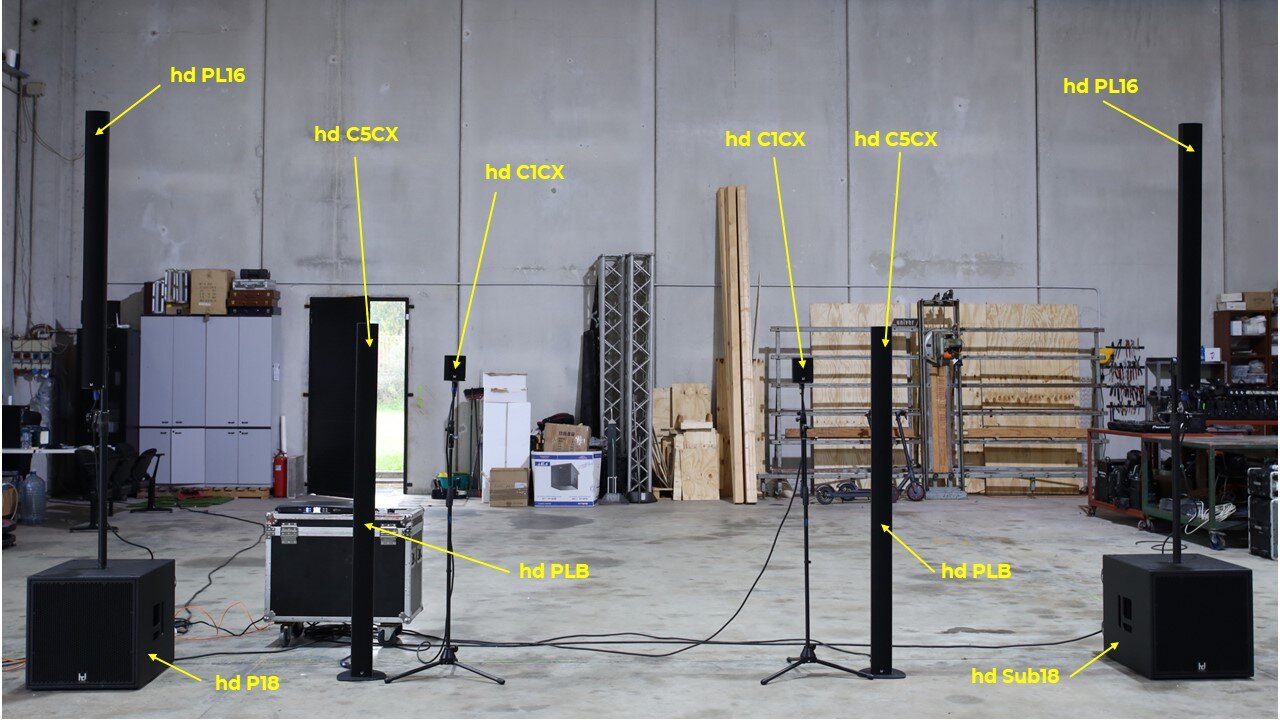
We set up two stereo listening systems, both inside the warehouse and outdoors.
1st setup
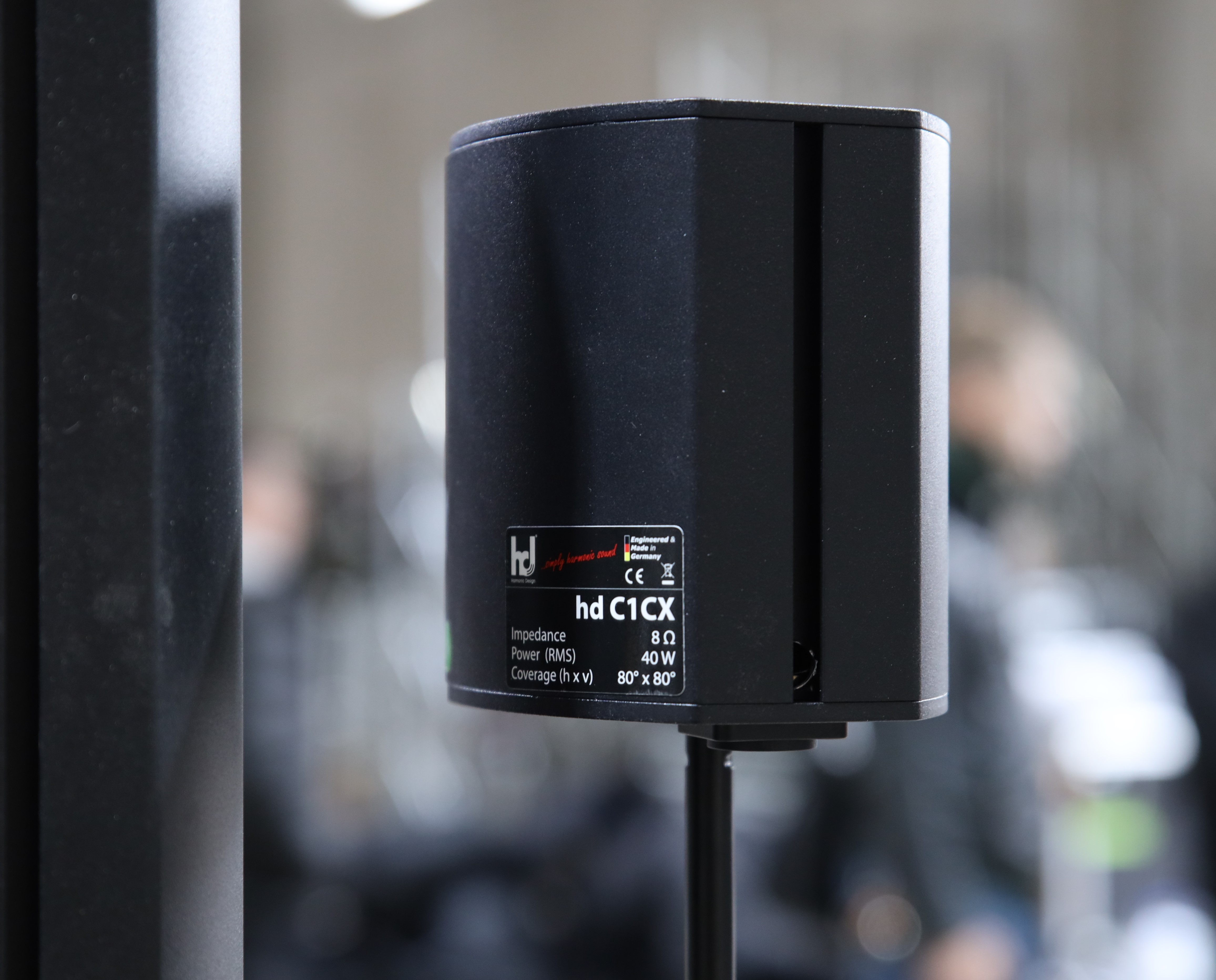
- 2 × hd C1CX – a 40 W passive mini loudspeaker featuring a 3.5” coaxial driver with a 1” tweeter.
- 2 × hd PLB + hd C5CX – a slim floor-standing loudspeaker that combines a low-frequency section identical to the hd PLB subwoofer with the hd C5CX mini column loudspeaker, integrated into a single enclosure to form a high-quality passive system (MIX+MATCH). The system is also available with the two cabinets supplied separately.
- A stereo PA system consisting of 2 × hd PL16 + 1 × hd P18 + 1 × hd Sub18.
The hd PL16 are passive column loudspeakers equipped with sixteen 3” drivers; the hd P18 is an active subwoofer with an 18” driver, while the hd Sub18 is the same subwoofer in its passive version.
2nd setup
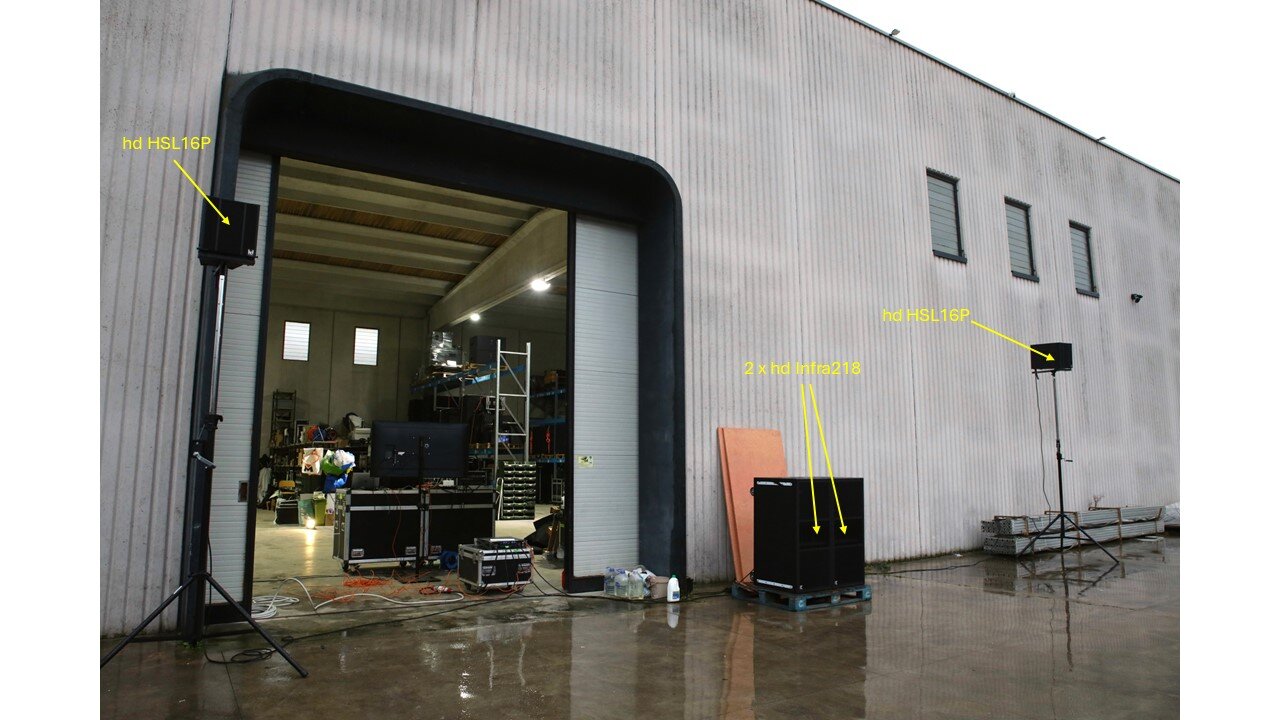
- 2 × hd HLS16P – PA loudspeakers based on the patented HLS (Hybrid Line Source) technology, capable of delivering high SPL from extremely compact enclosures when compared to traditional line arrays.
- 2 × hd Infra218 – high-performance subwoofers based on a hybrid design for the reproduction of ultra-low frequencies extending below 28 Hz.
Let’s start with the hd C1CX. What types of environments and applications are they designed for?
The hd C1CX are extremely compact loudspeakers, measuring just 10.8 × 12 × 10.4 cm and weighing only 1 kg. They are primarily intended for installations in small to medium-sized venues and can also be used in home environments, for example in high-performance multimedia workstations when paired with a subwoofer.
They represent an optimal solution for decentralised audio applications or spaces such as bars, restaurants and retail stores, mainly for background music reproduction, but also for conference rooms, theatre foyers, museum galleries or temporary exhibitions. In these contexts, they can be used, for instance, alongside a specific artwork to enhance the experience not only through lighting, but also with a carefully designed soundscape.
It is worth noting that these loudspeakers, like all Harmonic Design models, are available on request in any RAL colour, allowing them to blend seamlessly into the environment in which they are installed.

…and if I wanted to use them for mobile applications?
The hd C1CX are available both with a speakON NL4 connector, specifically for mobile applications, and with Euroblock connectors for permanent installations. They can be easily mounted on speaker stands with a 3/8" thread or on standard 35 mm diameter poles, thanks to a dedicated mounting flange that also houses the connector.
Let’s move on to the larger models, the so-called MIX+MATCH systems: what is the concept behind these loudspeakers?
What can be considered a limitation of the hd C1CX as with other loudspeakers of similar size or column systems with very small drivers is the limited low-frequency response. While this is not an issue for speech reproduction, it becomes more critical when reproducing music.
For this reason, the use of a subwoofer is essential. Within the wide range of solutions offered in its catalogue, Harmonic Design has developed the hd PLB in particular: a subwoofer with a slim, elegant design that matches the aesthetics of the PL and CCX series column loudspeakers, allowing it to blend seamlessly with the satellite units.
However, and this is the key concept behind the development of this product, known as MIX+MATCH, the manufacturer has made it possible to integrate the subwoofer and column loudspeaker into a single enclosure.
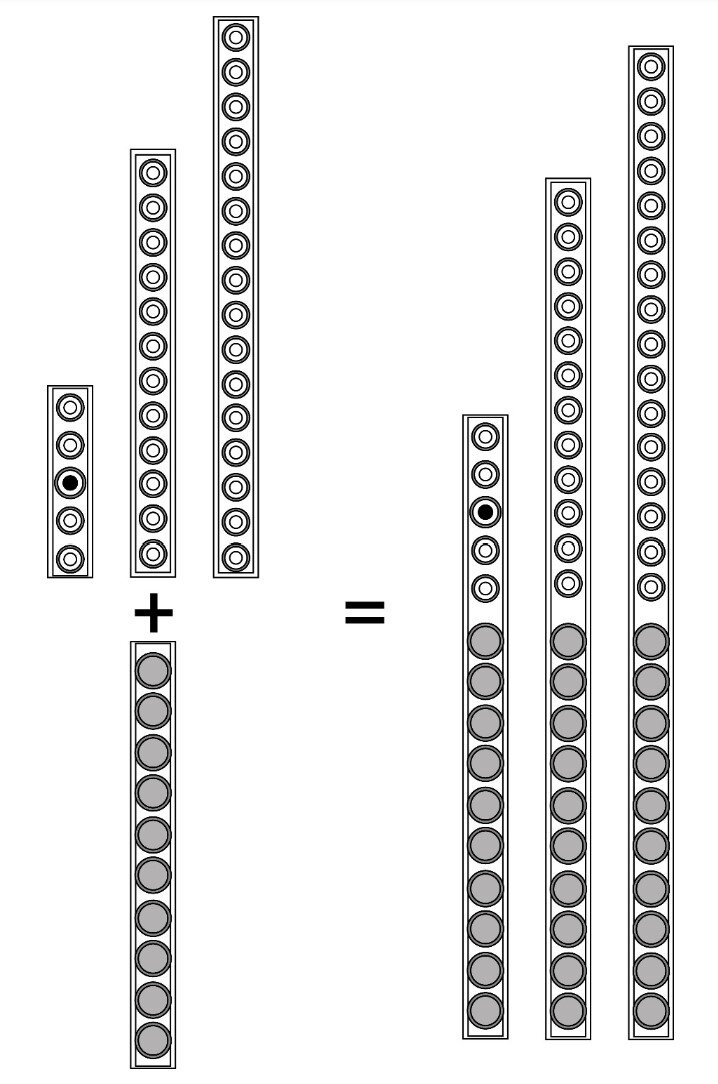
Harmonic Design MIX+MATCH systems are extremely flexible, as they can be configured by pairing any of the column loudspeakers, for example the hd C5CX (as in our case), or the hd PL12 / hd PL16, up to creating columns with an integrated subwoofer reaching heights of 2 or even 3 metres.
How are MIX+MATCH loudspeakers connected to the amplifier?
Harmonic Design MIX+MATCH loudspeakers do not include an internal passive crossover, and therefore must be driven in bi-amp mode, using an external electronic crossover and two power amplifiers, or alternatively a four-channel amplifier with upstream DSP that properly manages the frequency crossover between the LF and HF sections.
What is the most common application for this type of loudspeaker?
Thanks to its distinctly elegant appearance and extended low-frequency response reaching down to 40 Hz thanks to the integrated hd PLB subwoofer, this high-performance loudspeaker is well suited to sound reinforcement in venues such as lounge bars, restaurants, showrooms, conference rooms and hotels. It is also suitable for domestic A/V installations (hi-fi) and multimedia applications.
Let’s now move on to the column PA system with active/passive subwoofers. How is it configured and what are its key strengths?
The PA system featured in the demo consisted of four elements: two subwoofers (1 × hd P18 and 1 × hd Sub18) and two identical column loudspeakers (hd PL16). The subwoofers differ in that one is active and the other passive, yet both are equipped with a substantial 18” driver despite the extremely compact enclosure identical for both models which came as a surprise even to the participants.

The active hd P18 subwoofer features internal amplification stages for both the satellite loudspeakers and the second subwoofer, as well as an integrated DSP, effectively forming a complete 2.2 stereo system.

The strengths of this system are numerous. The PL16 columns feature an 80° horizontal and just 10° vertical dispersion, effectively making them line arrays, with the advantage of long throw and very limited vertical directivity. This makes them suitable even for highly reverberant venues, where only a minimal amount of sound energy reaches the ceiling or the floor. They are available both in PA versions, such as the ones shown in the photos, and in installation versions, for use for example in churches.
The subwoofers, on the other hand, are equipped with an 18” driver, allowing low-frequency extension down to 35 Hz. As mentioned, the hd P18 model integrates a two-channel 800 W RMS per channel Class-D power amplifier and a MultiDSP with FIR and IIR filters, which can be operated without necessarily requiring a computer. The corresponding installation versions differ in the absence of carrying handles.
Let’s come to the most important aspect: the sound…
It goes without saying that a service company warehouse is certainly not an ideal environment for critical listening but we had no alternative. We therefore asked the participants to share their impressions, and from the feedback collected we were able to identify several common characteristics.

The hd C1CX are surprising in relation to their size not in terms of power, SPL or frequency extension, but rather for their overall balance. The 80° × 80° dispersion ensures precise and uniform sound coverage. Speech is always clearly present and well defined, with accurate tonality, making them ideal for spoken-word reproduction in small spaces, where they also blend very discreetly into the surroundings.
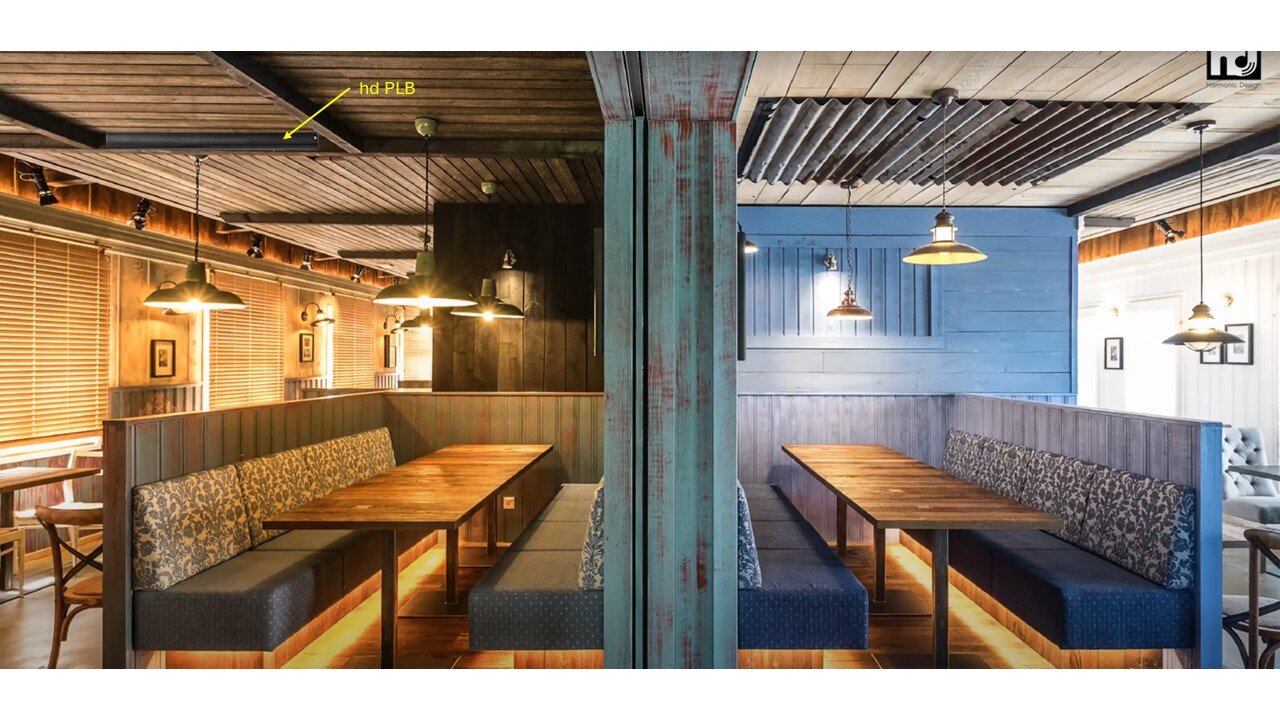
We also listened to them in combination with the hd PLB subwoofer integrated, as explained, in the MIX+MATCH systems which effectively extends their low-frequency response from an otherwise limited 120 Hz down to 40 Hz. The overall result is decidedly impressive, and the option to mount the subwoofer (which is 103 cm tall) horizontally and at height further expands installation possibilities, as shown in this example photo.
Moving on to the MIX+MATCH systems, and therefore to the complete floor-standing loudspeaker, we are essentially dealing with a hi-fi product. Compared to the previous solution, the mid/high range opens up noticeably, thanks to the additional output provided by the four 3” mid-woofers housed in the upper section of the cabinet none other than the hd C5CX column loudspeaker. The end result is a loudspeaker with an extended frequency response from 40 Hz to 22 kHz, capable of delivering a good degree of dynamics while remaining consistently well balanced. The low end is extended, but its character is very different from that of the classic subwoofers found in professional PA systems for DJ setups. Here, the goal is not impact at all costs, but a smooth and progressive extension of the low frequencies, complementing the mid/high range of the paired column. Potential applications range from corporate environments (showrooms, conference rooms) to educational settings, as well as residential, hospitality and fitness facilities.
The PA system, the third configuration we described, is a different story altogether. Here, sound pressure levels inevitably increase, the sound becomes more “aggressive,” and a sense of impact emerges the punch of the subwoofer, which, with its 18” driver, is capable of delivering a very satisfying physical response. The 16 drivers of the PL16 couple to form a wavefront with a 10° vertical aperture, allowing the system to operate according to the cylindrical wave principle, and therefore as a line array, with a sound pressure loss of only 3 dB per doubling of distance.
The reproduction is extremely clear and well defined, ideal for live music and DJ sets. Dynamics are high, and the specific system design allows for uniform projection and remarkable throw while keeping the tonal character virtually unchanged.


Once the listening session with the C and PL systems had concluded, we moved on to the large-scale system, the one featuring the hd HLS16P and hd Infra218 subwoofers, designed for the rental market, which for obvious reasons we set up outdoors:

What are the key features of the HLS16P?
HLS stands for Hybrid Line Source. The HLS16P are the smallest models in the range, which includes three main versions plus one variant. The proprietary hybrid technology on which they are based combines the advantages of point source systems with those of line arrays, minimising overall size and therefore transport costs, while delivering a level of sound quality characterised by exceptional uniformity and very low distortion.
The HLS16P can be used both in stand-alone configurations and in arrays. Their unique and exclusive design ensures extremely high efficiency, very compact dimensions and a maximum undistorted sound pressure level of up to 137 dB SPL for this model, increasing to 144 dB SPL for the HLS24.

Can we briefly recap the pros and cons of point source and line array systems?
The advantages of a point source system are:
- Lower initial investment costs
- Ease of transport and installation
- No need for complex simulation software for proper operation
- No requirement for advanced technical skills during setup
The disadvantages of a point source system are:
- Limited throw, suitable only for small to medium audience areas. Due to spherical radiation, SPL drops by 6 dB with each doubling of distance from the source, resulting in a fatiguing listening experience close to the loudspeakers and progressively less satisfying coverage further away
- Use of single loudspeakers only, as the system cannot be expanded in a modular way
The advantages of a line array system are:
- High adaptability for large-scale sound reinforcement
- Ability to cover long distances (long throw)
The disadvantages of a line array system are:
- High costs
- Significant truck space required for transport
- Need for experienced personnel
- System planning and simulation requirements
Harmonic Design’s proprietary concept combines the strengths of both technologies by developing a hybrid, horn-loaded line source. In this model, it employs two 8” woofers for the low-frequency range and two 1.4” drivers with a special polymer diaphragm for the high-frequency range, both featuring neodymium magnets.
What operating principle are they based on?
The two compression drivers used for the mid-high frequencies, coupled with waveguides, generate a cylindrical wavefront with a 40° vertical coverage angle. The electrical load on each individual driver is reduced to 25%, so that their operating point is 12 dB lower for the same sound pressure level. As a result, distortion is significantly reduced and the sound remains more neutral. At the same time, substantial headroom is available to cover long distances.
How are the HLS16P units connected when used in arrays or on stands?
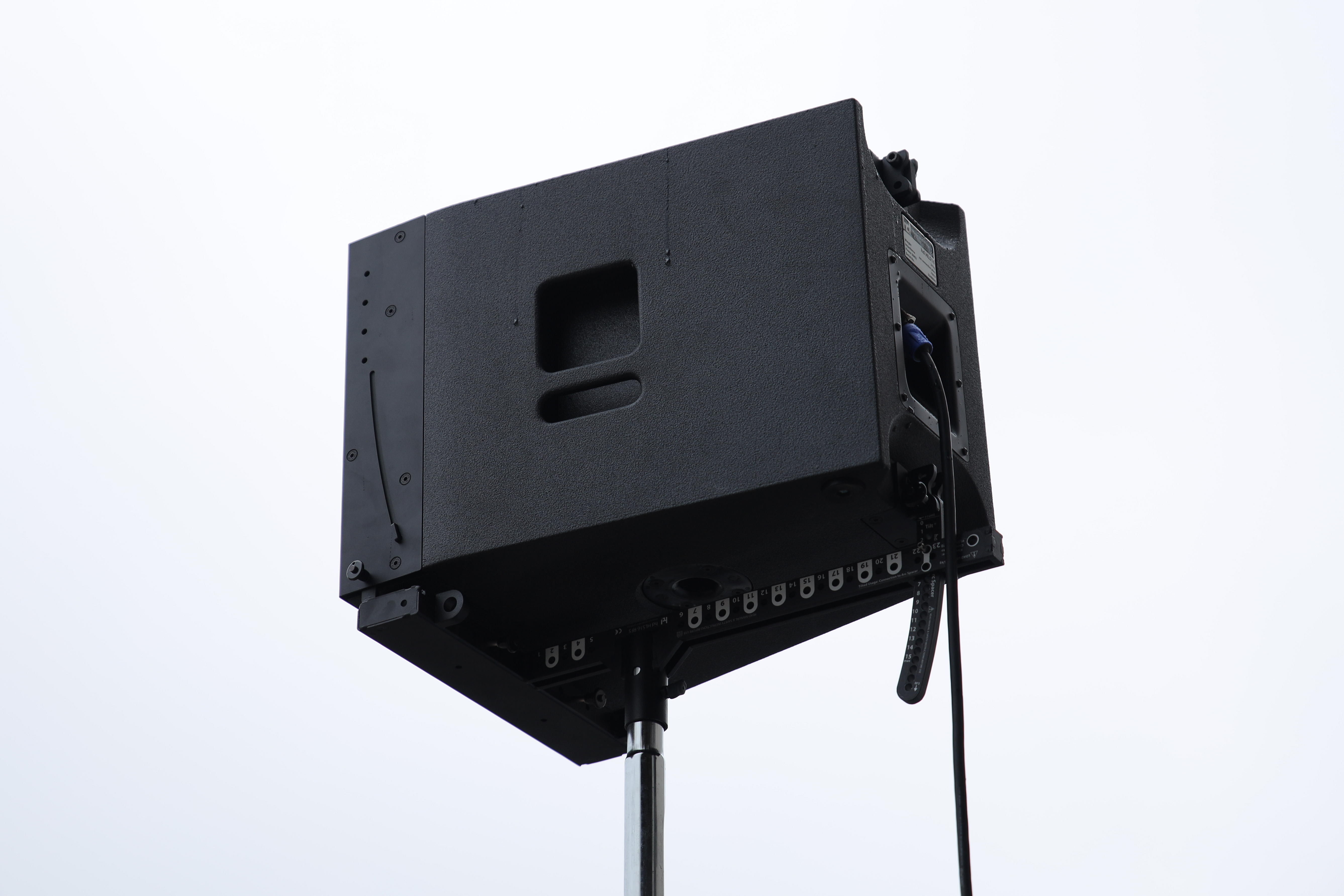
Harmonic Design has developed the HLS16-RF3, which functions both as a flying bar and as a tilt adapter for stand mounting. It can be used to mount the loudspeaker on a pole with precise angle adjustment in 1° increments from 0° to 15°, as well as to suspend a vertical array of up to eight loudspeakers.
This solution offers maximum flexibility for applications that change on a daily basis, while at the same time reducing the number of dedicated accessories required.

Let’s talk about the subwoofers: why did you choose the hd Infra218?
The decision to use two units, stacked vertically, was driven by the need to properly match the output of a pair of satellites such as the HLS16P. If more HLS16P were used, forming a two- or three-module array per side, it would certainly be necessary to deploy at least four subwoofers.
Naturally, the final configuration always depends on the size of the audience to be covered and on the characteristics of the venue.
What are the main features of these subwoofers?
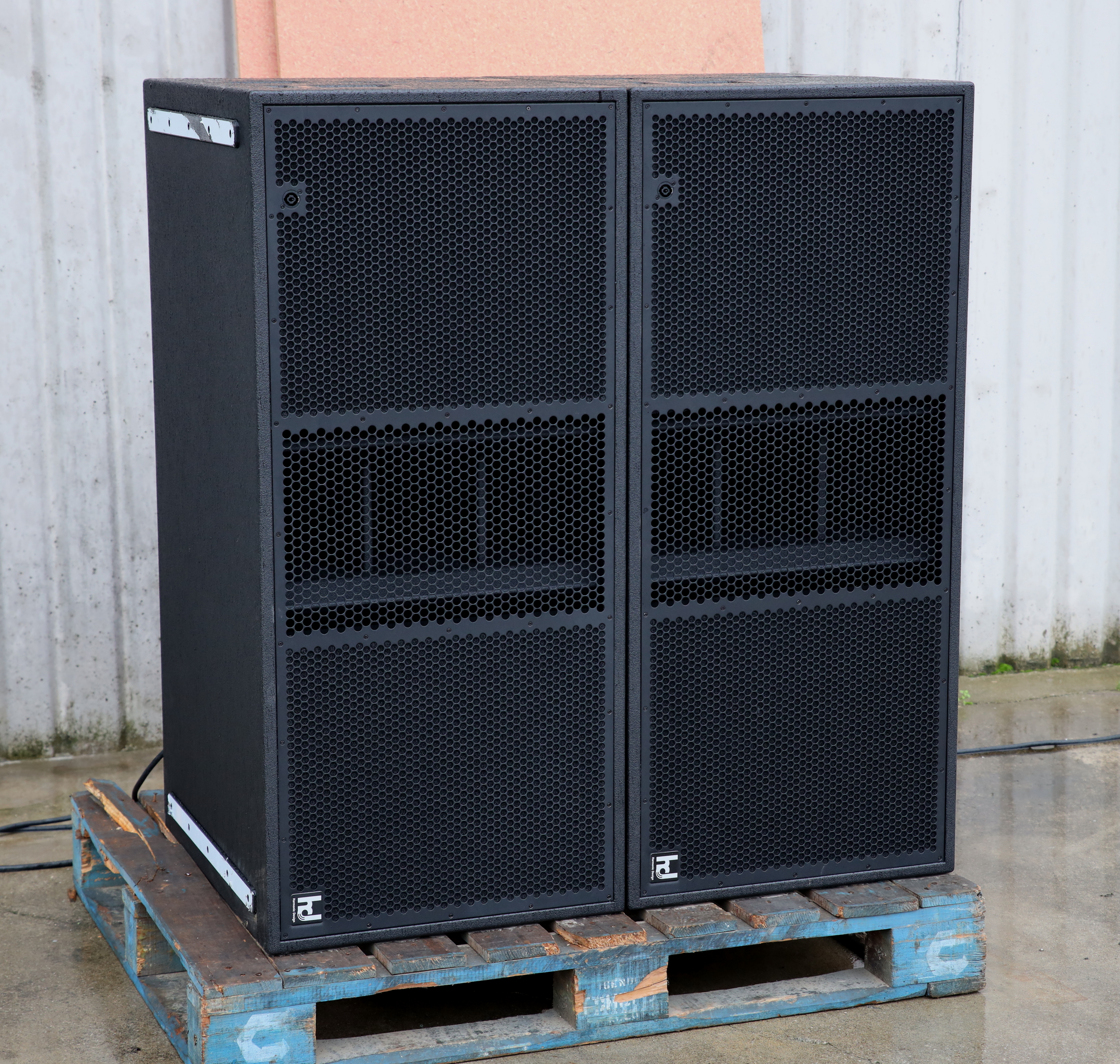
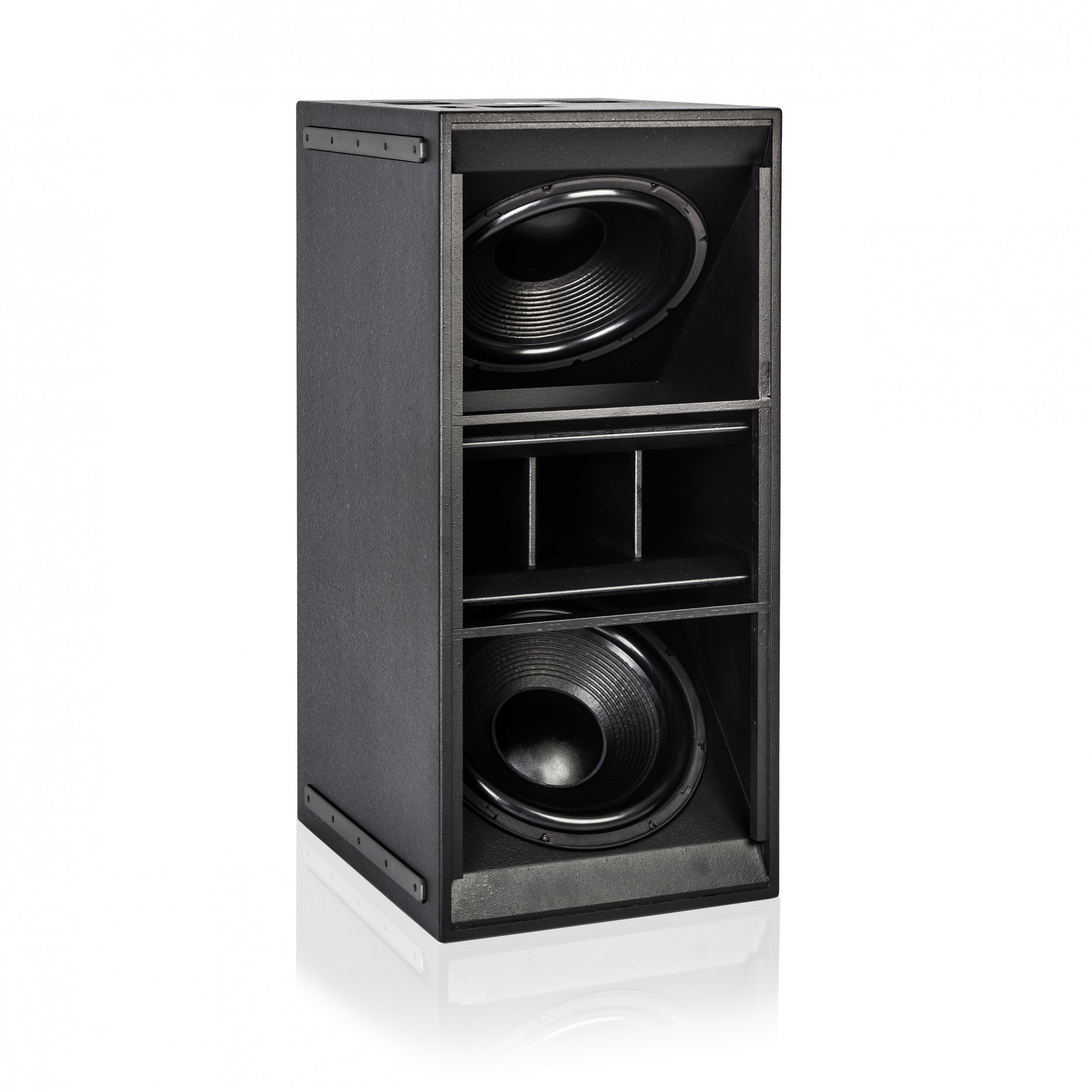
The Harmonic Design hd Infra218 are high-performance passive hybrid subwoofers designed to reproduce extremely low frequencies, down to 28 Hz. They are equipped with two high-excursion 18” drivers, each with a continuous power handling of 3,600 W and a peak power rating of 14,400 W. Their robust construction, combined with a hybrid horn-loaded and bass-reflex design, ensures powerful and precise low-frequency reproduction with minimal distortion.
The cabinet design, optimised for the airflow generated by the large transducers, minimises turbulence and distortion, while its inherent directivity allows cardioid configurations to be easily achieved using three subwoofers, with the centre unit rotated 180°—that is, radiating in the opposite direction to the stage.
Listening impressions
This 2.1 PA system represents the starting point for a scalable setup designed to achieve wider coverage. Expansion can be accomplished by increasing the number of HLS16 units and/or selecting more powerful models such as the HLS20 or HLS24, as well as by increasing the number of subwoofers from two to four, and so on.
A single HLS loudspeaker mounted on a stand can cover distances of up to 45 metres and an audience of around 1,000 people. When flown from a truss, coverage can reach up to 2,500 people. A double array, again flown from truss, can cover up to 60 metres and approximately 4,000 people, while a triple array can reach audiences of up to 10,000 people with a throw of 100 metres.
Finally, an array configuration using five HLS units can easily cover 15,000 people and reach distances of up to 150 metres.
Focusing on sonic performance, the system delivers a detailed, dynamic and powerful sound with strong impact, comparable to that of the best conventional line array clusters, but with the advantage of a much smaller footprint. A single HLS16P cabinet, weighing just 24 kg and featuring very compact dimensions, is equivalent in terms of output to three traditional line array modules with 8” drivers, which would typically weigh close to 90 kg.
The performance of the HLS16P is particularly impressive, with no audible distortion even at very high levels except when the power amplifiers begin to clip. We moved around to different listening positions, standing between the two loudspeakers and varying our distance from them, and consistently observed extremely uniform coverage, thanks to the 100° horizontal dispersion.
The Infra218 subwoofers kept pace effortlessly with the satellites, delivering the kind of “visceral impact” that is characteristic of infra subwoofers with 18” drivers.
Naturally, precise system tuning is essential, along with the use of amplification suited to this level of performance, such as Harmonic Design amplifiers with LevelZ software.
The HLS16P units were driven in full-range mode, as this version features an internal passive crossover. A bi-amp version without crossover is also available.
In conclusion, this high-performance PA system is suitable both for touring applications, such as live concerts requiring very high sound pressure levels and maximum control over sound dispersion, and for permanent installations, for example in theatres and auditoriums. The satellite and subwoofer combination also ensures a wide frequency response, extending from 28 Hz to 20 kHz.
Wanto to learn more?
Email us at international@audioeffetti.it


