
 English
  French

Multi-room audio systems are among the most effective solutions for enhancing the guest experience in hospitality environments. The ability to distribute content across multiple areas, manage each zone independently, and maintain a consistent sonic and visual identity helps to enhance every space, streamline technical operations, and elevate the perceived quality of service.
This article explores the concept of multi-room audio in hospitality, its main applications, and some of the most relevant solutions offered by Audio Effetti.
Today, the guest experience in hospitality environments increasingly depends on the quality of audio and video, the integrated management of spaces, and ease of operation. Modern AV technologies make it possible to design systems in which audio, video, and control work in coordination, providing staff with a centralized and intuitive interface. This approach enables efficient management of music, announcements, soundscapes, and multimedia content, reducing response times and minimizing the risk of errors.
Multi-room audio systems, in particular, allow the distribution of music and voice across different areas—from the lobby to the spa, from the restaurant to the bar or gym—with independent content for each zone. At the same time, they offer centralized yet flexible control, capable of adapting to operational needs and guest expectations. Thanks to audio matrices, dedicated loudspeakers, and scalable infrastructures, it is possible to create reliable systems that integrate seamlessly with the architecture of the space.
An increasingly востребован feature is the ability to control the system via apps or smart interfaces, enabling operators to quickly adjust music, announcements, and soundscapes. This enhances service quality while ensuring a consistent experience across all environments.
The concept of zones
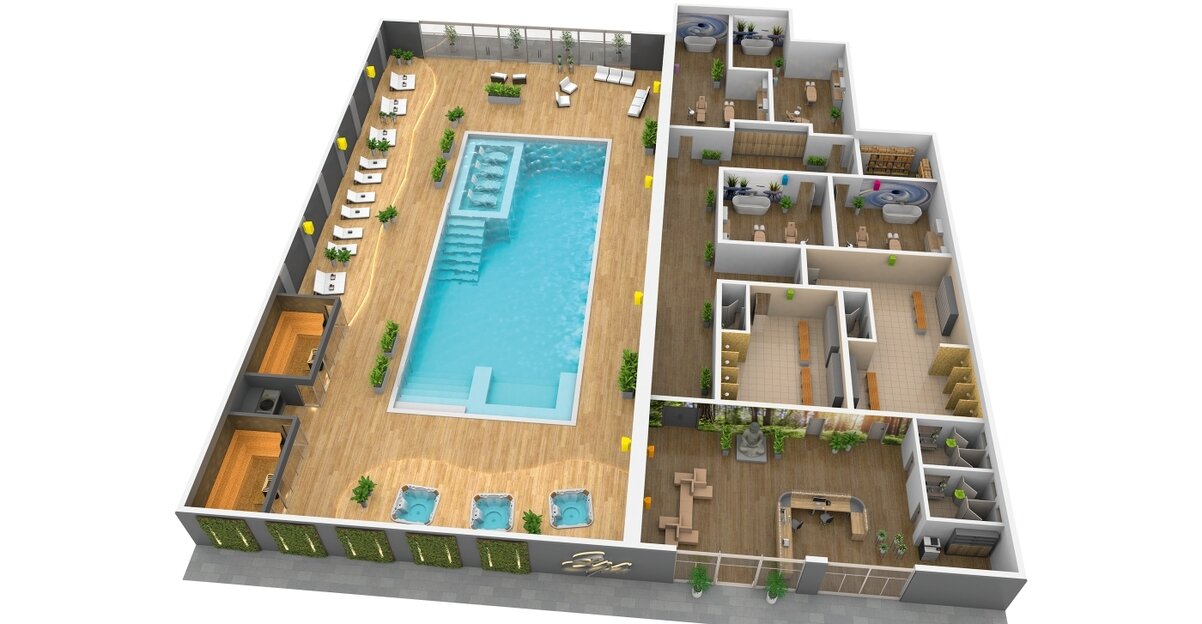
At the core of a multi-room system lies zone management—this is what sets it apart from a simple distributed audio system with multiple loudspeakers, even across different areas. A zone represents a physical or functional area within the facility where volume, sources, and preset audio scenarios can be controlled independently.
Zones are essential because they allow the guest experience to be tailored, delivering content that is perfectly suited to each environment: relaxing music in a wellness center, more dynamic playlists in a gym, or informational and promotional content in the lobby and reception. At the same time, they enable staff to operate more efficiently, thanks to centralized control that reduces intervention time and the risk of errors.
In addition, dividing the system into zones makes it scalable, allowing new areas to be added without invasive work—especially when AV over IP technologies are used. Each zone can be managed individually or grouped into scenarios that simplify daily operations, such as evening mode, event mode, or relaxation mode.
Multi-room systems therefore find application across a wide range of hospitality environments:
- Hotels and resorts, for differentiated audio distribution across lobbies, corridors, spas, restaurants, and outdoor areas
- B&Bs, agriturismi, thermal resorts, and wellness centers
- Restaurants, lounge bars, and bistros, with playlist and source management based on time of day, atmosphere, sporting events, or promotional content
- Large hospitality facilities spread across multiple floors or buildings
This category can also include beauty centers, as well as architecture and design studios, particularly for the management of waiting areas and additional services.
Another increasingly relevant aspect is safety. Certified EVAC (Emergency Voice Alarm Communication) systems for fire evacuation can be integrated into the existing audio infrastructure, ensuring regulatory compliance and enabling remote monitoring. This topic will be explored in more detail in a dedicated article.
Multi-room amplifier, the heart of the system
LEM Commercial D-Drive 1.8k4-ae
Multi-room audio for “light” hospitality projects
The Lone Audio LA-140WIKIT system by Rondson makes multi-room audio accessible even in hospitality environments where simplicity, discretion, and fast installation are essential—alongside cost efficiency. It consists of a pair of in-ceiling loudspeakers, one active and one passive, with integrated Bluetooth and Wi-Fi, designed for public spaces such as retail stores and restaurants. This “hybrid” approach is precisely what makes the system particularly appealing: with a single set, it is possible to create a complete, self-contained listening point, ready to be integrated into a multi-room ecosystem without the need for external amplifiers or complex wiring.
The active speaker acts as the core of the system, handling connectivity and driving the passive unit via a simple terminal connection. This forms the basis of a modular multi-room concept: each pair can become an independent “zone,” easily replicated across reception areas, breakfast rooms, corridors, or lounge spaces. Integration with the 4STREAM app—designed for configuring and controlling networked audio distribution—allows users to create groups, synchronize playback, and manage sources with the same ease as a consumer system, while maintaining the reliability required in professional environments.
The inclusion of a remote control and the option to connect additional sources via an auxiliary input further enhance system flexibility. Meanwhile, ceiling installation with a flat magnetic grille ensures minimal visual impact. The result is a kit that stands out for its ability to evolve from a simple pair of speakers into an intelligent node within a multi-room network, offering a scalable solution that can grow from a single pair of loudspeakers to a more extensive system, in line with the development of the venue and its operational needs.
In a market where multi-room solutions are often perceived as complex or expensive, this system demonstrates that a professional-grade experience can also be achieved through a streamlined, almost plug-and-play approach.
Conclusion
Multi-room audio-video systems represent a strategic solution for enhancing the quality of the experience offered in hospitality environments. Zone management, intelligent content distribution, and integration with more advanced systems make it possible to create comfortable and technologically sophisticated spaces, from the smallest areas of a beauty center to large hotel infrastructures.
Thanks to the solutions offered by Audio Effetti, it is possible to implement a modern, scalable AV infrastructure that can be perfectly tailored to specific operational needs.
Want to learn more?
Email us at international@audioeffetti.it


