
 English
  French

Column loudspeakers are now among the most appreciated solutions for sound reinforcement in small to medium-sized and acoustically challenging environments. Their line array geometry provides significantly greater directivity control compared to traditional point source systems, reducing floor and ceiling reflections while substantially improving speech intelligibility. Thanks to the coherent summation of multiple small full-range transducers, they generate a cylindrical wavefront that maintains a more consistent sound pressure level even over longer distances. Their compact format, discreet and easily integrated design, together with convenient portability, make them ideal for corporate events, conferences, small musical ensembles and fixed installations. In this article, we will examine the fundamental principles behind this technology and take a closer look at the Elokance Tower 12, a powerful, versatile and surprisingly affordable active three-way system.
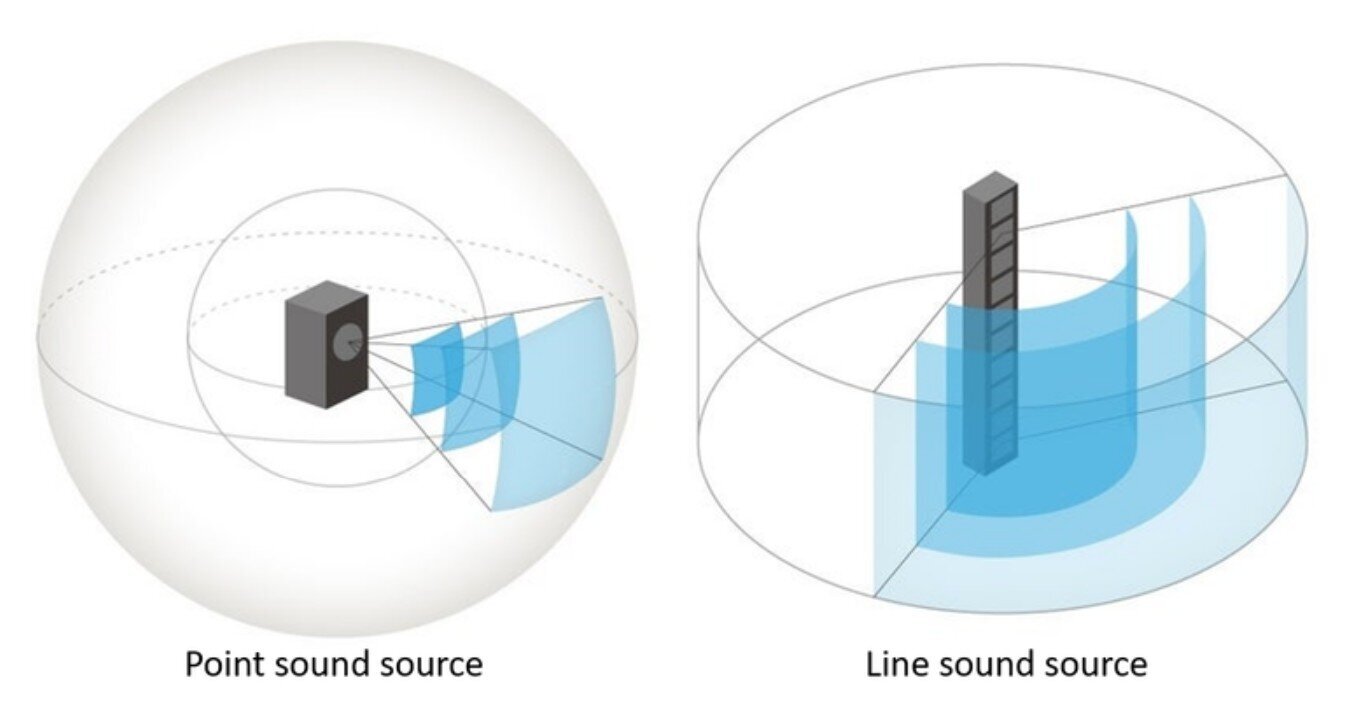
Column loudspeakers have revolutionised the way sound reinforcement systems are conceived and designed. Although they are derived from the vertical line array principle, they are optimised for smaller-scale applications rather than large concerts, offering an ideal balance between audio quality, dispersion control and seamless aesthetic integration within different environments. The concept behind them is straightforward: small loudspeakers, typically 3” or 4” drivers, arranged in a vertical line and positioned very close to one another so they behave as a single coherent source. By placing multiple acoustic centres in close proximity, the dispersion gradually shifts from spherical to cylindrical (within certain frequency ranges), becoming narrower in the vertical plane while generating a sound pressure level inversely proportional to distance (∝ 1/d) rather than to the square of the distance (∝ 1/d²).
The ability to generate true cylindrical wave radiation allows the resulting pressure wave to travel over distances of several tens of metres with very limited attenuation, typically only 3 dB for every doubling of the distance from the source. This behaviour, impossible to achieve with a traditional point source loudspeaker, makes it possible to effectively cover even the furthest audience areas without excessively increasing the volume, thereby reducing sound spill outside the venue and improving acoustic comfort for listeners closer to the system. In practical terms, it greatly reduces the familiar and often unpleasant effect experienced during live performances, where sound pressure levels are excessively high near the loudspeaker but drop rapidly with distance, leading to the tendency to raise the volume even further.
Column loudspeakers: PA vs fixed installation
- Installation column loudspeakers (without subwoofer), optimised for speech reinforcement in highly reverberant environments. In this case, the priority is not music reproduction but speech intelligibility. The low-frequency response is intentionally limited to avoid exciting the reverberant field, while the vertical directivity is extremely narrow in order to focus the sound exclusively on the audience area. They are the ideal choice for churches, conference halls, railway stations, museums and any environment where message clarity is more important than musical performance.
A significant example is represented by the LEM Commercial BORA44-LINE, passive two-way column loudspeakers equipped with four 4" Kevlar cone mid-woofers and a 1" horn-loaded tweeter. They are suitable for demanding weather conditions thanks to their dust protection and resistance to water splashes and jets from any direction (IP56 certification).
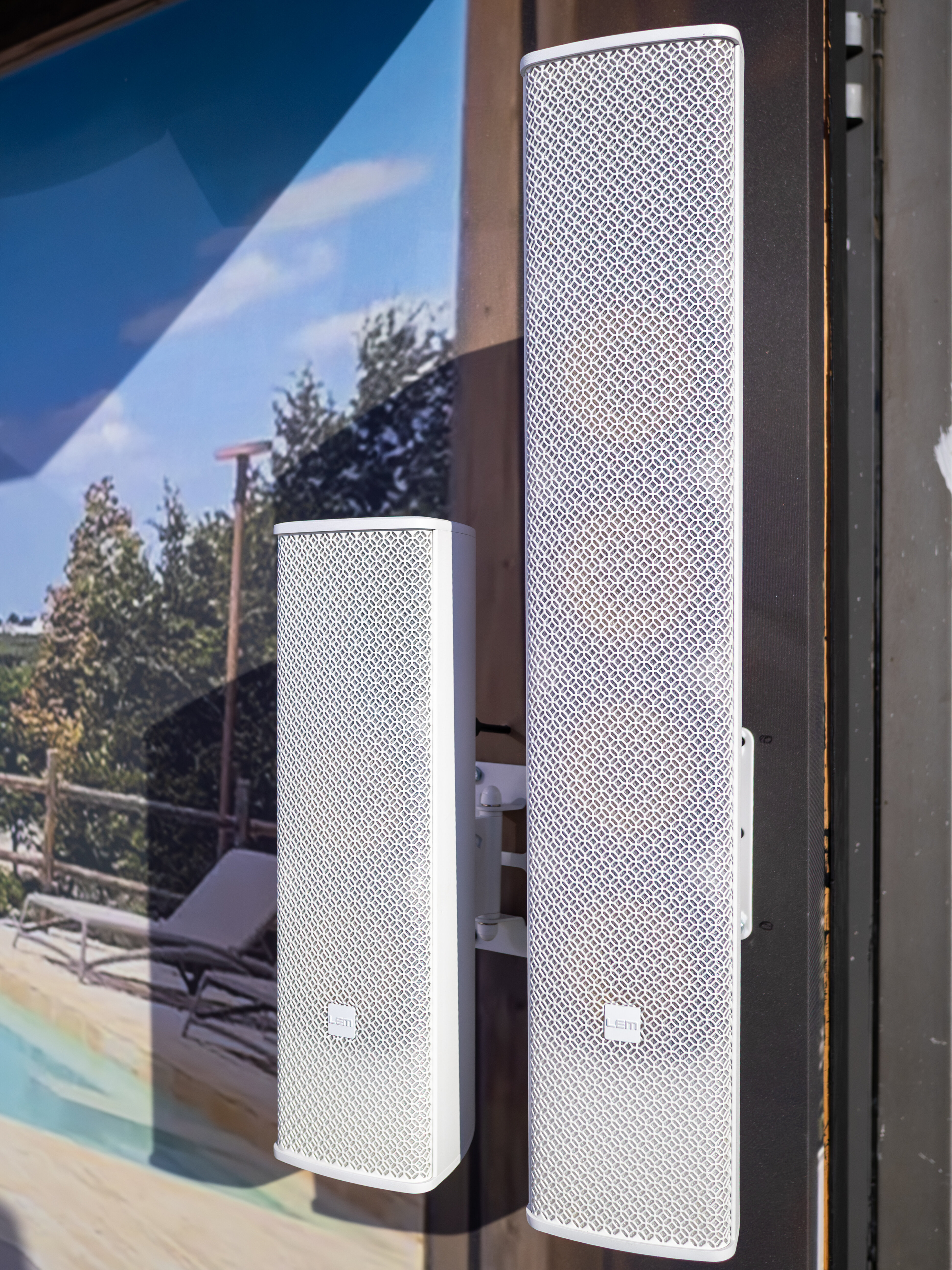
Of course, these are not the only options, as the Audio Effetti catalogue includes many other solutions.
Understanding this distinction is essential when choosing the most suitable system: the form factor may appear similar, but the intended applications are fundamentally different.
The advantages of column loudspeakers compared to point source systems
The advantages of column loudspeakers compared to traditional point source systems can be summarised as follows:
- Controlled vertical directivity
In point source systems, sound radiates spherically, striking the floor and ceiling and generating reflections that reduce clarity. Column loudspeakers, on the other hand, produce a cylindrical wavefront with very narrow vertical dispersion, resulting in:
- Less reverberation in churches, sports halls and conference rooms
- Greater speech intelligibility
- More consistent coverage throughout the listening area
- Wide horizontal coverage
Horizontal dispersion is generally quite broad (typically between 90° and 140°), making column loudspeakers ideal for covering wide audience areas without the need for additional side-fill loudspeakers.
Typical applications
Column loudspeakers are commonly used in:
- Churches and places of worship: highly reverberant environments where narrow vertical directivity is essential (note: the longer the array, the narrower the vertical directivity becomes)
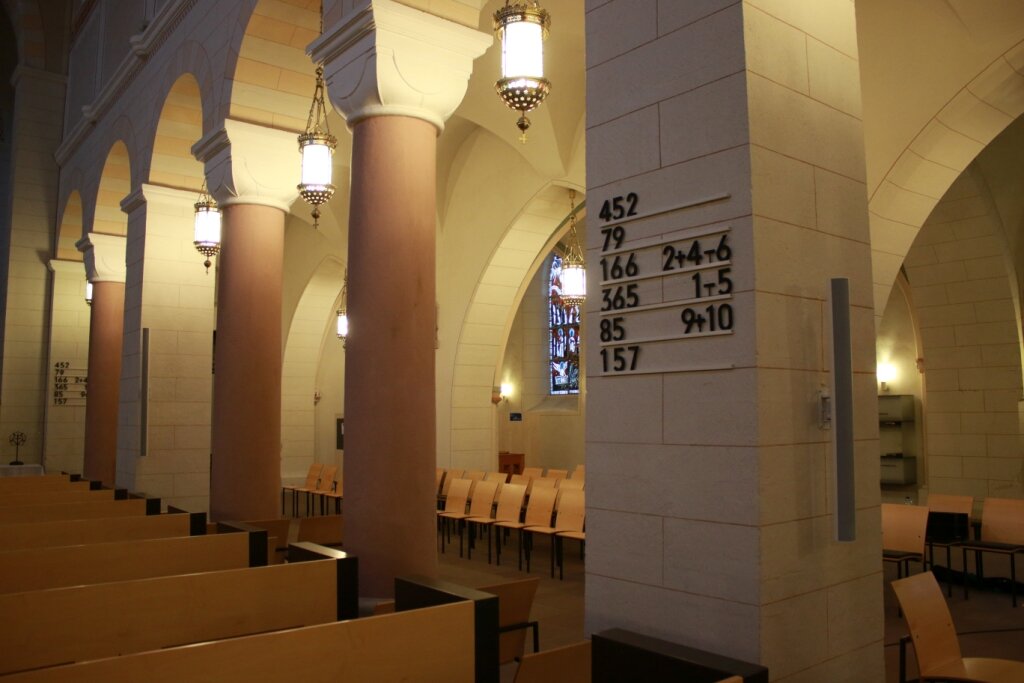
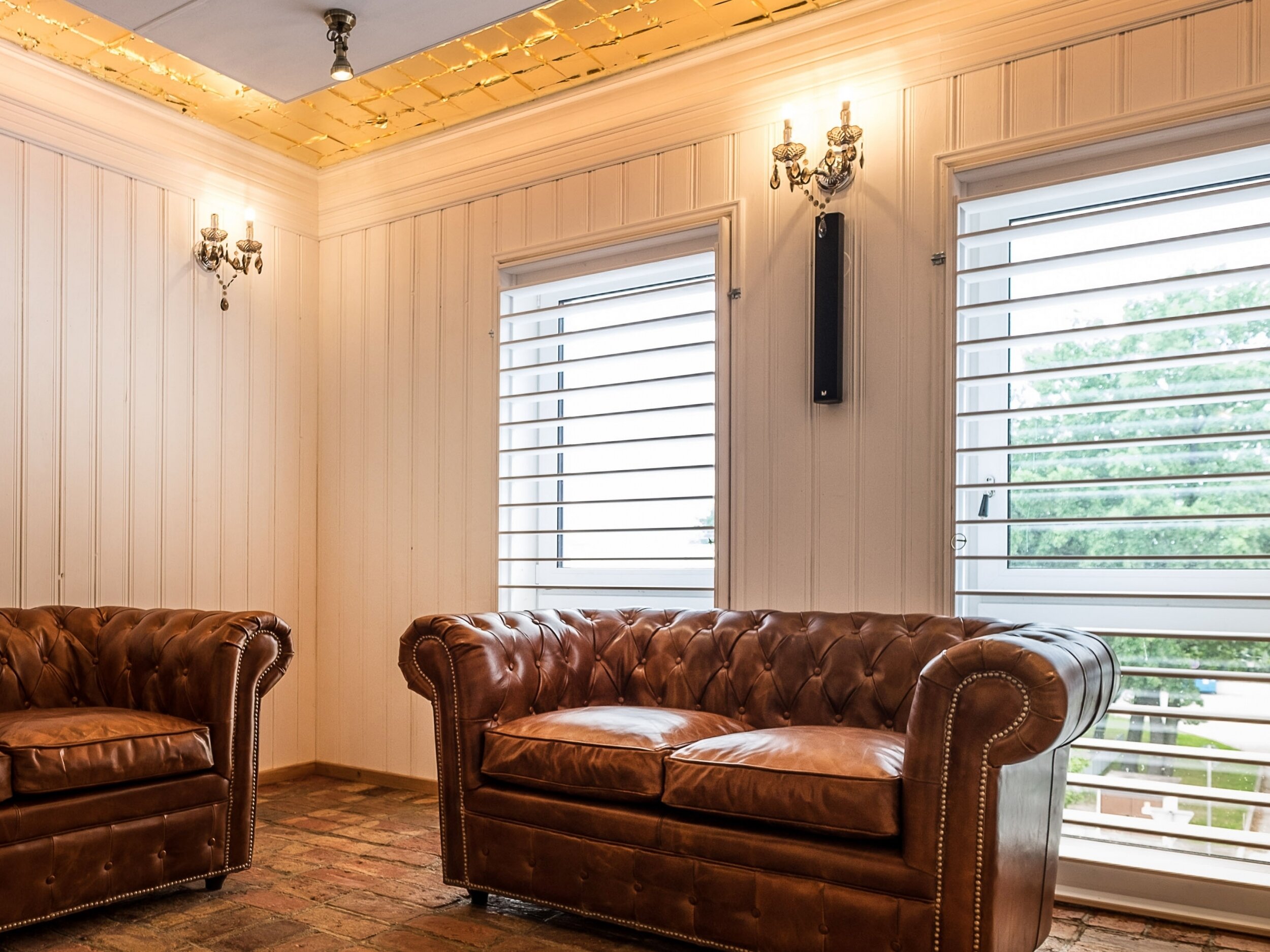
- Conference rooms, corporate meetings and educational spaces: maximum speech intelligibility, discreet aesthetics and minimal footprint
- Small and medium-sized live events: DJ sets, acoustic performances and light bands, with consistent coverage and fast set-up
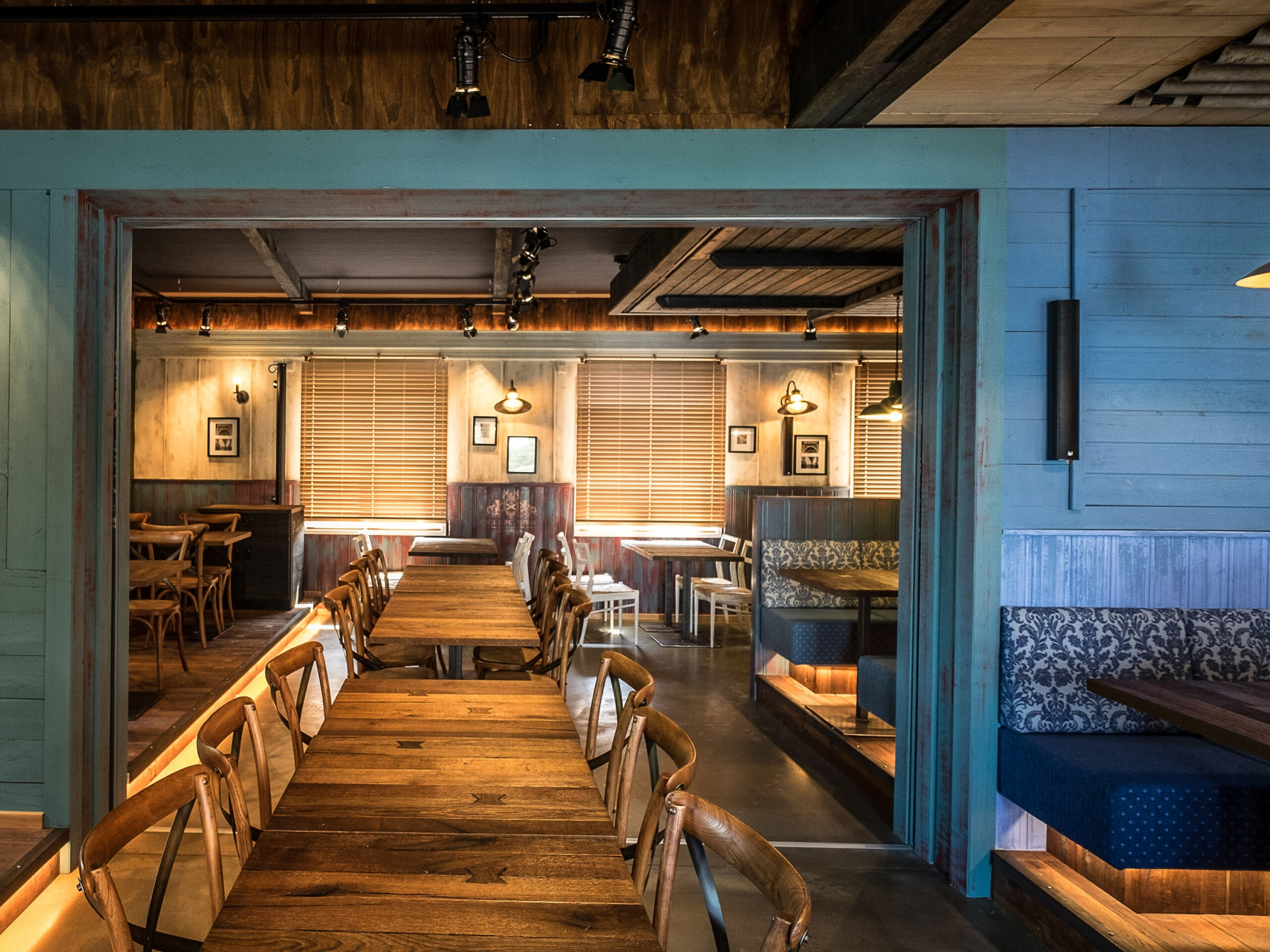
- Fixed installations in public venues: restaurants, hotels, museums and trade fairs, combining elegant design with controlled sound dispersion
Elokance Tower 12
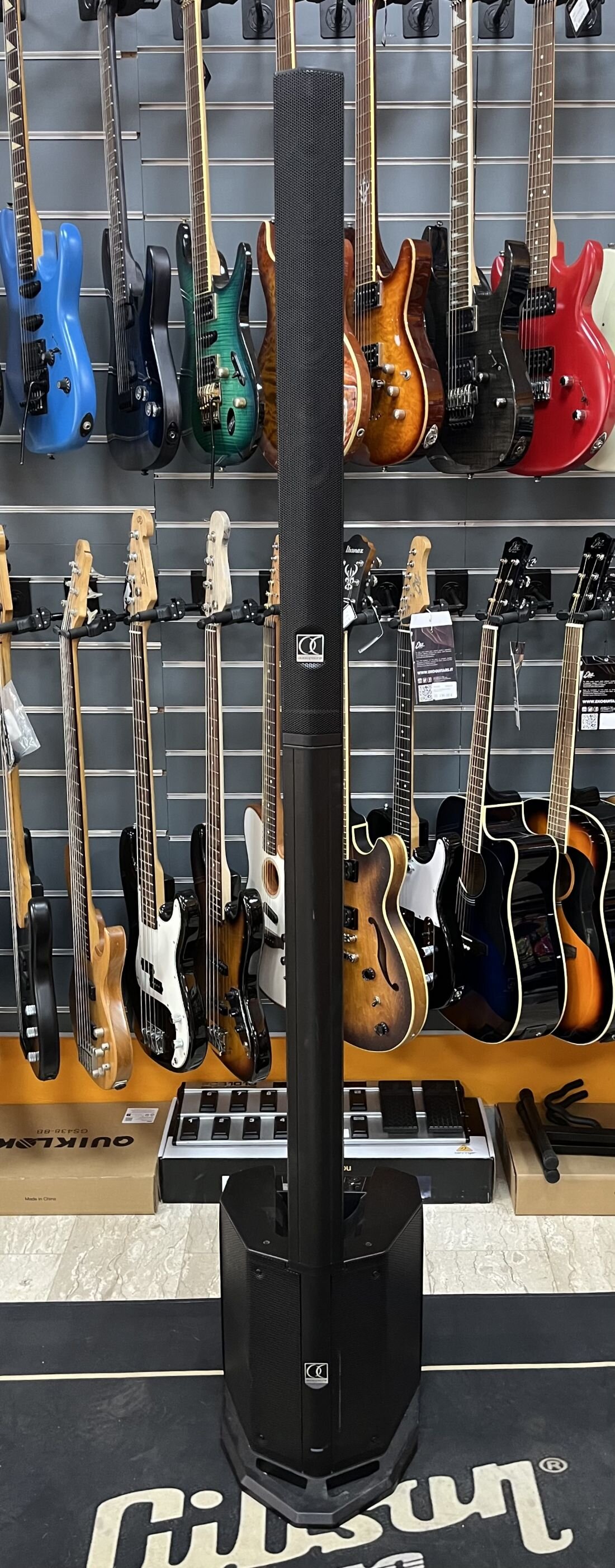
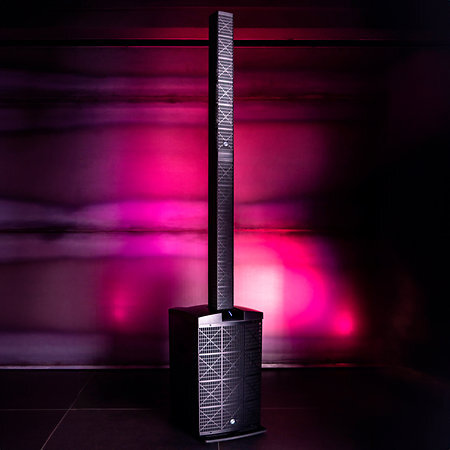
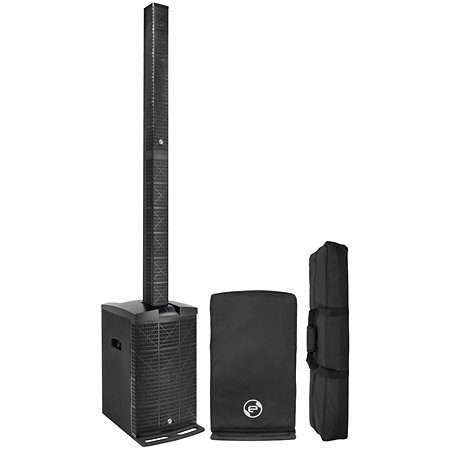
To represent the category of PA column loudspeakers, we chose a particularly interesting example: the Elokance Tower 12. It impresses from the very first minutes of listening, successfully combining power and tonal coherence in a compact format with a modern, technology-oriented design.
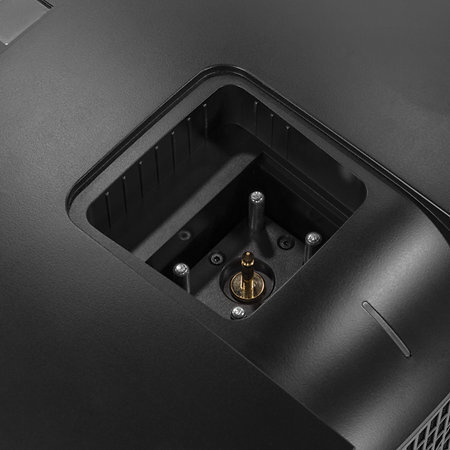
Elokance is a French loudspeaker brand recognised for offering products with an especially attractive price-to-performance ratio. In this case, we are looking at an active three-way system designed to deliver a full-range frequency response, featuring a 12" subwoofer capable of producing solid and controlled low frequencies, thanks in part to its birch plywood cabinet. The ABS column section incorporates six 3" drivers dedicated to the midrange and a 1.8" tweeter with a neodymium magnet, responsible for the clarity and definition of the high frequencies. This architecture allows the Tower 12 to maintain a very natural tonal balance, with vocals always remaining prominent and musical reproduction staying clean even at high output levels. It is worth noting that, of the two column sections, only the upper section contains the loudspeakers, while the lower section acts purely as a support base. Electrical connection is handled via a connector located on the top of the subwoofer, which sends the already amplified signal to the column, eliminating the need for any external signal cables.
The wide horizontal dispersion of the Elokance Tower 12 is one of its main strengths, allowing broad audience areas to be covered without the need for additional loudspeakers, while the controlled vertical directivity reduces unwanted reflections, making the system particularly effective in conference rooms, corporate events and acoustically challenging environments. Despite its impressive power rating — 800 W RMS (500 W for the subwoofer and 200 W for the mid-high section), with peaks up to 2000 W — the Tower 12 remains remarkably easy to manage, with a maximum SPL of 130 dB that places it among the best-performing solutions in its category.
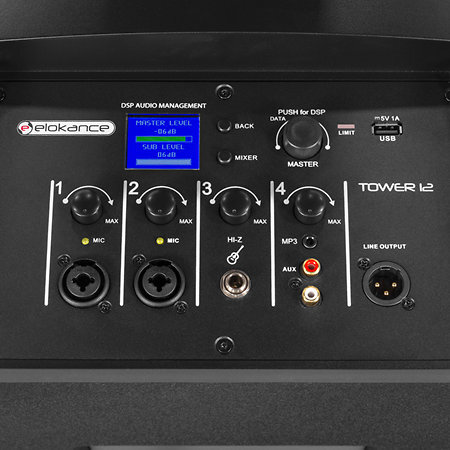
From an operational standpoint, the system is designed for immediate use, with all controls conveniently located on the top panel of the subwoofer. The integrated DSP makes it easy to achieve a balanced sound without complex adjustments: users can independently control the master volume and subwoofer level, while selecting from four factory presets — Music, Club, Live and Speech. Connectivity options include two Combo inputs, 2 × stereo RCA plus a 3.5 mm mini-jack input, a 6.3 mm high-impedance jack input (all with independent volume control), and Bluetooth 5.3 with TWS functionality, making the system suitable for any scenario, from solo musicians and DJs to rental companies requiring a simple and reliable Plug & Play solution. Also worth noting is the presence of a USB port for charging multimedia devices when needed.
The balanced Line output allows the Tower 12 to be linked with virtually any other audio system. However, when creating a stereo configuration with these loudspeakers — which are designed as mono systems — the most logical solution is to use a second Tower 12 via Bluetooth TWS, or alternatively take the stereo output from a mixer and feed the left and right channels separately to the two systems.
Want to learn more?
Email us at international@audioeffetti.com


