
 English
  French

High-brightness projectors capable of easily exceeding 10,000 ANSI lumens continue to represent the most effective solution when impactful visual performance is required in demanding applications such as architectural pixel mapping, projections on irregular surfaces or water screens, and dynamic scenic installations.
This article introduces the two main projection technologies, analyses the different light sources currently available, and finally explores the distinctive features of two representative Appotronics models from the S Smart and S Pro series respectively.
Projection systems in the brightness range above 10,000 lumens – particularly between 10,000 and 20,000 lumens, where most professional applications are concentrated – are playing an increasingly central role in all those situations where LED walls are difficult to install or unsuitable due to logistical, aesthetic or flexibility-related reasons.
In these scenarios, high-brightness projectors offer a unique combination of visual quality, versatility and the ability to adapt to variable surfaces and projection distances, as already explored in a previous article.
In a market segment where reliability and operational continuity are essential requirements, DLP technology continues to represent the most solid solution. It is precisely within this context that Appotronics, a prestigious new addition to the portfolio of brands distributed by Audio Effetti, positions itself with a range of DLP laser projectors designed to redefine the standards of colour reproduction, image quality and robustness.
Technologies compared: DLP vs. LCD
DLP projectors
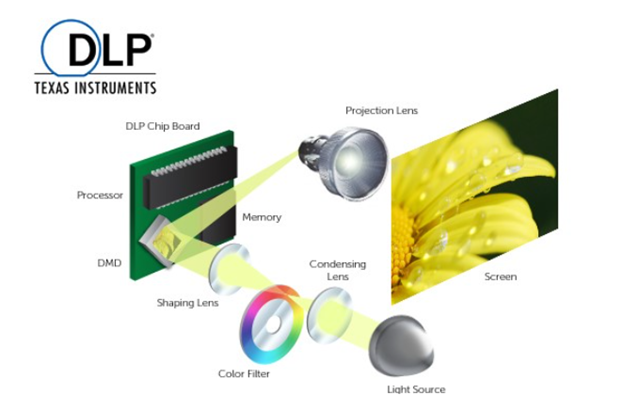
For many years, DLP (Digital Light Processing) technology, invented and patented by Texas Instruments in 1987, has represented the most advanced standard for video projection systems, and in many cases it still does today. The image is generated by an array of microscopic mirrors, each corresponding to a single pixel, mounted on a semiconductor integrated circuit known as a Digital Micromirror Device (DMD).
DLP projectors are divided into single-chip and three-chip models. In single-chip systems, the light generated by the source passes through a high-speed colour wheel composed of segments including red, green, blue and sometimes white or additional colours. The wheel generates coloured light pulses that illuminate the DMD, while the micro-mirrors modulate these pulses by reflecting them towards the lens to create the image. Thanks to persistence of vision, the human eye rapidly integrates the red, green and blue sequences, perceiving them as a full-colour image. However, some viewers are able to distinguish the individual colour flashes projected in rapid succession, a phenomenon known as the rainbow effect.

Three-chip DLP
To reduce or even eliminate the so-called rainbow effect, several solutions can be adopted, but the most effective is undoubtedly three-chip DLP technology, which represents the highest-performing and most expensive evolution compared to single-chip systems. In a three-chip projector, the white light generated by the source is split into its red, green and blue components through a dichroic prism.
Each colour component is directed to a dedicated DMD, where the micro-mirrors modulate the light to create the image associated with that specific colour. The three beams are then recombined within the same optical system and projected through the lens, producing an extremely bright, uniform image free from visual artefacts.
LCD projectors
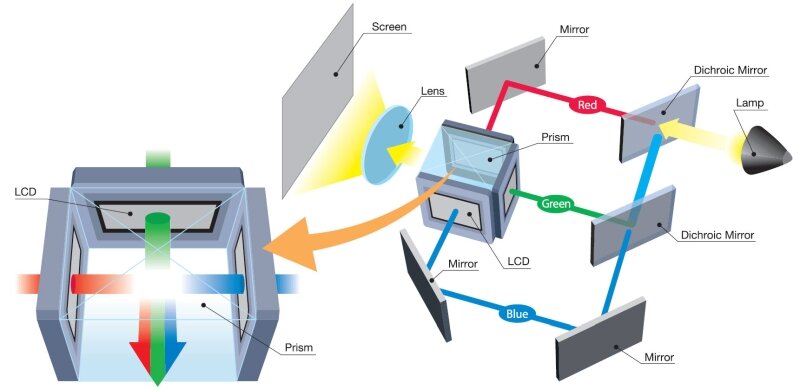
In LCD projectors, DMD chips are replaced by LCD panels, with one panel assigned to each RGB video signal component in the three-panel systems typically used in professional applications.
In these systems, the white light generated by the source is split into the three primary components — red, green and blue — through prisms and dedicated filters. Each beam is then directed towards its respective LCD panel, which modulates the light to generate the corresponding image component. The three light paths are finally recombined through a dichroic prism before reaching the projection lens, forming a single full-colour image.
LCD projectors offer good colour fidelity, but they show certain limitations when moving towards higher brightness ranges. LCD panels are more sensitive to heat and tend to degrade over time, especially in continuous-use applications. Maximum achievable brightness is also generally lower compared to DLP models in the same category, although the most recent systems can still reach levels of around 20,000 lumens. Maintenance requirements are typically higher as well, while black reproduction and native contrast remain less effective.
From lamps to solid-state illumination (SSI) light sources
For many years, both DLP and LCD projectors relied on the same light source technologies, primarily based on UHP or xenon lamps in high-end models. These lamps, subject to wear and typically offering a lifespan between 2,000 and 6,000 hours, involved significant replacement costs and frequent maintenance requirements. To overcome these limitations, the industry progressively introduced laser-based light sources, which have now become dominant in the professional market.
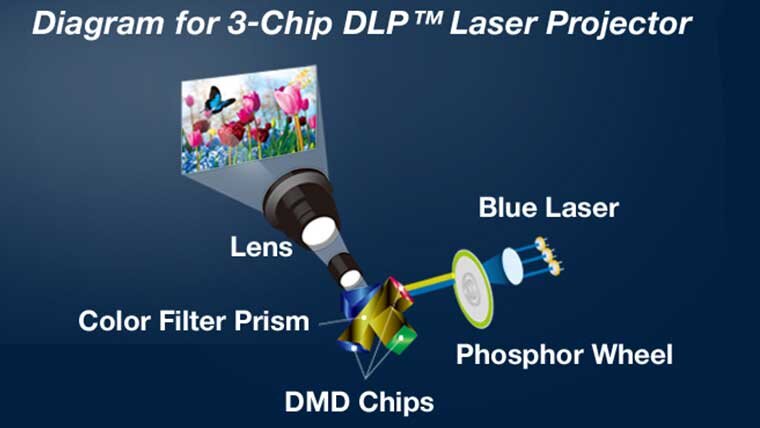
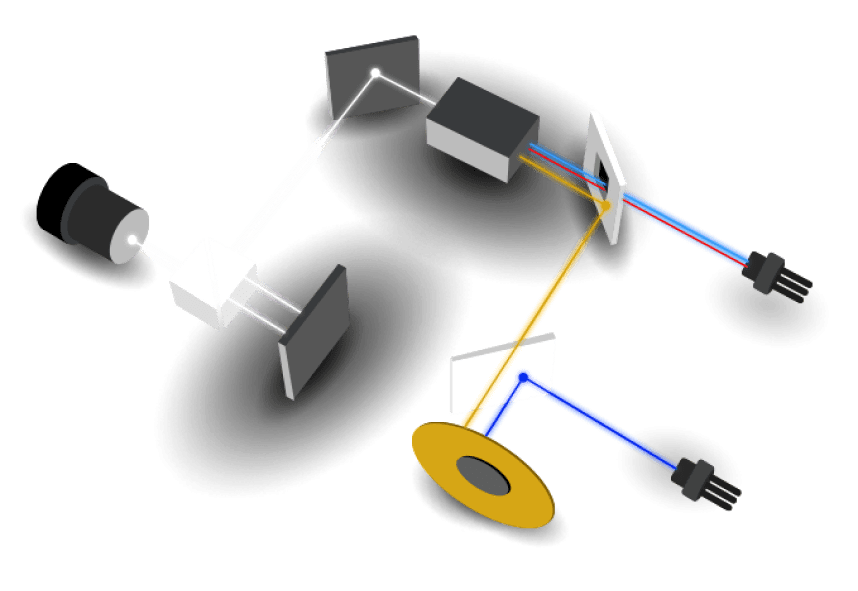
The first laser projectors used a blue laser to excite a phosphor wheel, generating white light that was then split into RGB components through prisms and dichroic filters. Although considerably more reliable than traditional lamps, this solution initially presented limitations in colour accuracy and was mainly adopted in corporate or educational environments, where colour performance is generally less critical.
In the diagram above, the phosphor wheel is used to generate white light, which is then split into the three RGB components and directed, through a series of mirrors, towards the three DMD panels (or LCD panels, depending on the system architecture).
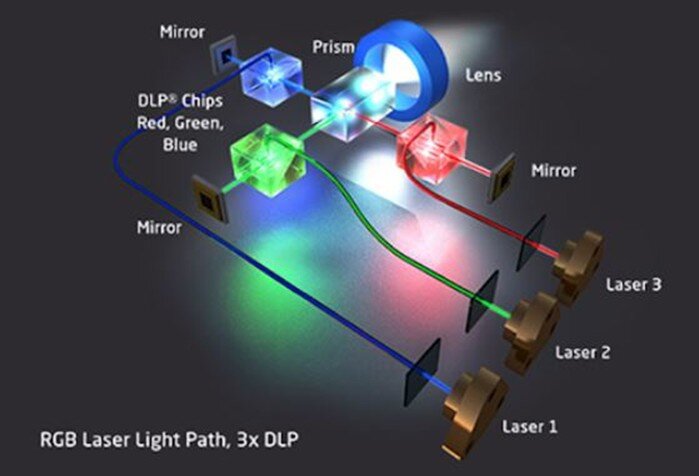
The next stage in this technological evolution led to pure RGB laser systems, in which three independent laser beams directly generate the red, green and blue components. This approach delivers superior colour reproduction and has opened the way to the most demanding applications, including architectural mapping, museum installations and high-end rental environments.
Laser light sources offer numerous advantages, including lower power consumption, virtually instant start-up, significantly slower and more predictable brightness decay compared to traditional lamps, and an operational lifespan that can reach 20,000 to 30,000 hours.
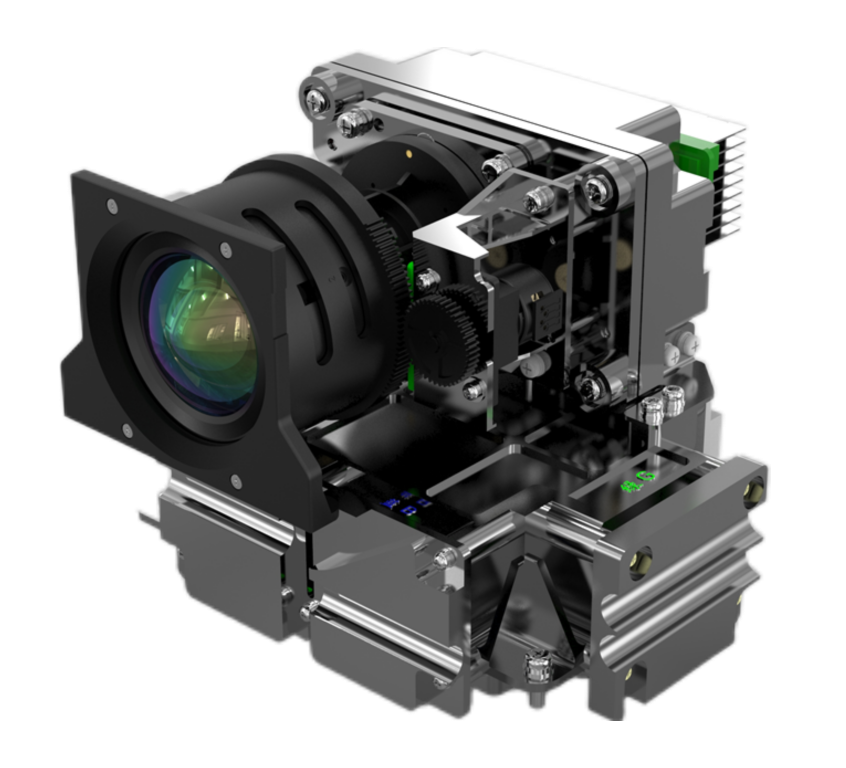
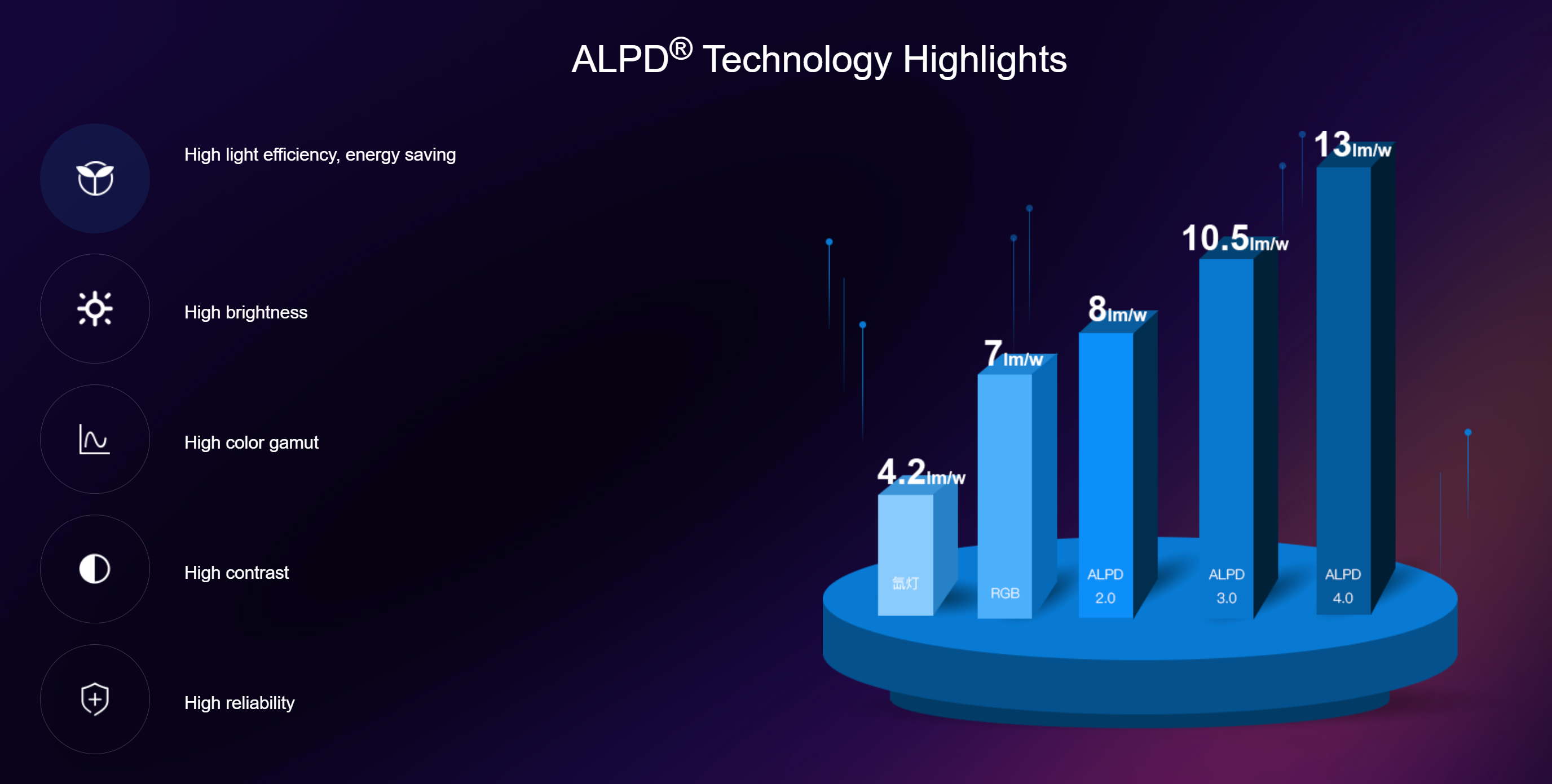
In recent years, hybrid solutions combining different light-generation technologies have also been developed. Among these, Appotronics’ ALPD technology stands out, based on an advanced combination of laser and phosphor systems. The technology has evolved from the earliest blue laser + phosphor configurations to the latest generations, such as ALPD 5.0, which integrate additional lasers at different wavelengths and, when required, complementary light sources such as LEDs to expand the colour gamut and further enhance image quality.
Appotronics, the new benchmark for high-brightness DLP projectors
Appotronics has established itself as one of the most authoritative players in the high-brightness projection market thanks to its highly advanced research into laser light source technology. The company’s goal has always been to achieve images that are more natural while simultaneously delivering richer colours compared to traditional laser solutions. The answer to this requirement is RGBX technology, a proprietary system that represents the core of the entire product range.
The concept behind RGBX originates from a well-known limitation of pure RGB laser systems: each primary colour is generated by a dedicated laser, producing extremely intense emission concentrated within a very narrow spectral peak. While this approach ensures very high brightness levels, it can also generate colours that appear less natural and, above all, create unwanted artefacts on challenging surfaces, where laser light tends to sparkle and reflect unevenly.
To overcome these limitations, Appotronics developed a light source combining RGB lasers with photoluminescent materials and additional complementary light sources designed to broaden the emitted spectrum, particularly in the green range, where the human eye is most sensitive. As a result, the light is no longer composed of three isolated spectral peaks, but instead achieves a much wider and more uniform continuity, delivering a softer, more natural and stable visual result.
It is precisely this spectral continuity that makes RGBX technology particularly effective in critical applications. In water screen projections, for example, where pure laser systems often generate highly visible sparkling effects, the Appotronics light source maintains a readable and homogeneous image. The same applies to transparent screens, dynamic scenic environments and immersive installations, where colour quality must remain consistent even under high-brightness operating conditions.
This focus on light quality is complemented by an extremely wide product portfolio. Appotronics is in fact one of the very few manufacturers capable of covering the entire high-brightness range, from 5,000 to 34,000 lumens, with DLP projectors specifically designed for entertainment, live events and architectural installations.
From an optical perspective, several interchangeable lenses are available, covering throw ratios from ultra-short throw up to telephoto configurations above 7:1, all featuring extensive motorised lens shift. This flexibility significantly simplifies system design in real-world installations, where projection distances are not always predictable.
All models also integrate a motorised shutter, a particularly valuable feature in live productions. Since laser beams originating from the stage — increasingly common in modern shows — can irreversibly damage a DLP chip, the ability to instantly close the shutter ensures immediate and reliable protection.
The technical package is completed by optional HDBaseT and 3G-SDI slots, along with dedicated power outputs for routers, converters and other auxiliary devices, helping simplify integration into complex systems.
The combination of these features makes Appotronics projectors especially suitable for architectural applications, outdoor events, theatre scenography and large-scale productions, where brightness, colour stability and reliability are not optional features, but essential requirements.
In particular, we will focus on two models from the Audio Effetti catalogue: the 10,000-lumen AL-SU10KAS from the S Smart series, representing the entry point into the range above 10,000 lumens, and the 20,000-lumen AL-SK20KAP from the S Pro series.
The first model, AL-SU10KAS, is a WUXGA DLP projector (1920 × 1200 pixels) capable of delivering 11,000 centre lumens, designed for medium-sized venues. Equipped with the ALPD 5.0 RGBX full-spectrum laser engine, it provides significantly superior colour performance compared to solutions based on single-laser phosphor technology.
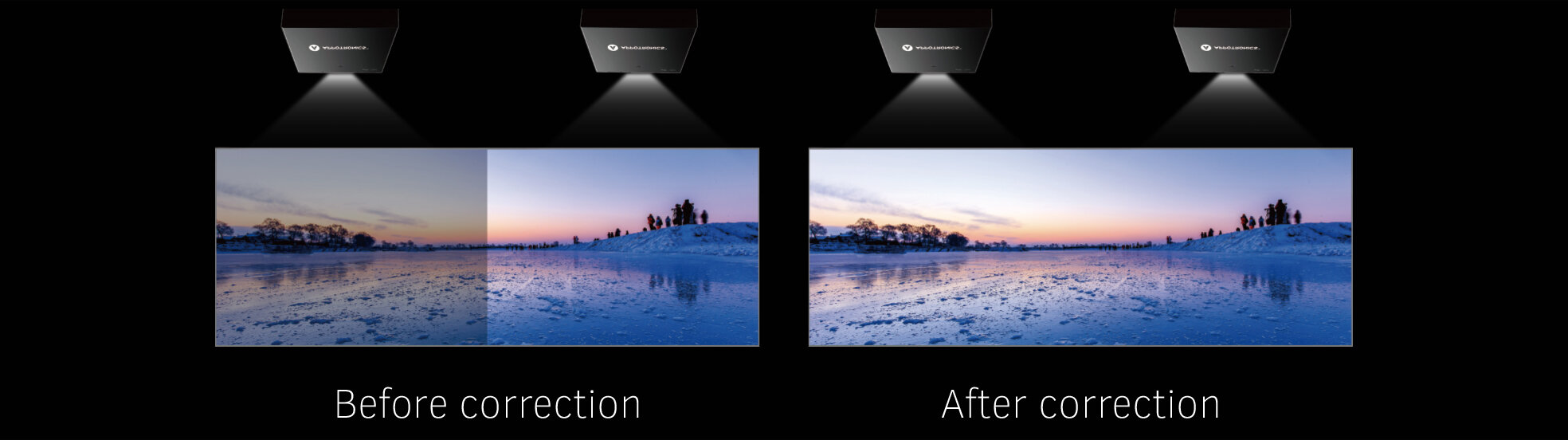
Its lightweight structure and nine optional lenses — including one fixed-focus and several zoom options — simplify integration in complex environments, while geometric correction and edge blending functions ensure excellent uniformity even on non-flat surfaces.
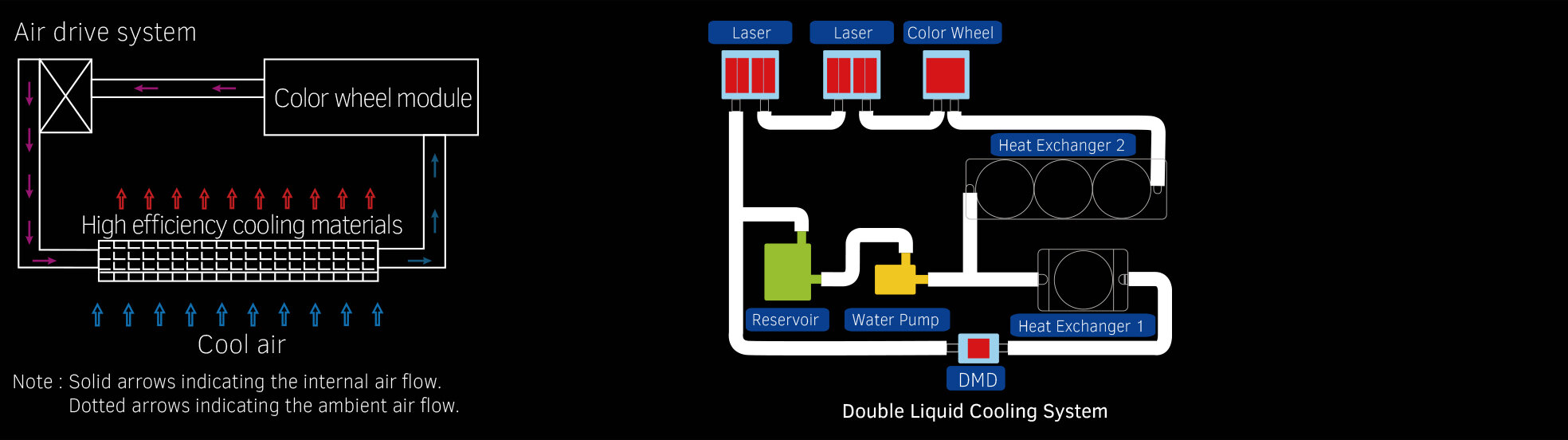
The IP6X-sealed optical engine and the 20,000-hour laser light source ensure long-term reliability, further supported by a liquid cooling system and a patented internally cooled colour wheel.
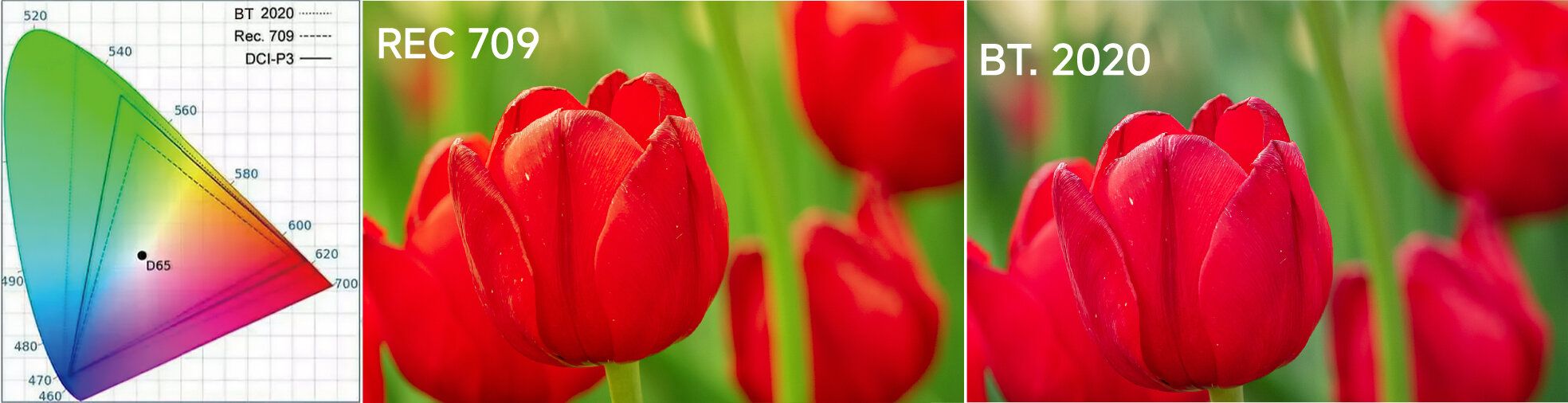
The second model, AL-SK20KAP, is a high-brightness 20,000-lumen DLP projector (21,000 centre lumens) featuring the RGBX laser light source based on ALPD 5.0 technology, capable of covering up to 100% of the DCI-P3 and BT.2020 colour spaces for exceptionally wide and natural colour reproduction.
It delivers 4K+ resolution (3840 × 2400 pixels), extremely high contrast (≥ 100,000:1) and intelligent HDR processing capable of preserving detail in both highlights and shadows. Its compact design simplifies installation, further supported by advanced geometric correction features and remote management and control through the APCS platform.
The fully sealed optical engine, patented internally cooled colour wheel and 20,000-hour laser light source ensure reliability and operational continuity even in demanding applications. Thanks to 3D compatibility and outstanding colour stability, it is ideally suited for large venues, projection mapping, theatres, museums, houses of worship, theme parks and immersive installations.
Compared to competing solutions in the same brightness category, the AL-SK20KAP stands out, as previously mentioned, thanks to its RGBX full-spectrum laser light source. This difference makes the S Pro series particularly suitable for the most demanding professionals — art directors, scenographers, designers and creative studios — who require absolute colour fidelity and flawless visual consistency, even on complex or unconventional surfaces.
In addition, the native 4K resolution delivered through DLP technology provides superior detail reproduction compared to systems that simulate 4K via pixel shifting, ensuring greater precision in fine textures and graphic content. Thanks to the combination of wide colour gamut coverage, high contrast and true 4K resolution, the S Pro series approaches the performance typically associated with high-end 3-chip DLP systems, while still maintaining the compact size, reduced weight and cost advantages typical of single-chip projectors.
Finally, it is worth noting that within the Appotronics range, alongside the single-chip models enhanced by RGBX technology, there is also a three-chip DLP projector specifically designed for the most demanding applications in terms of brightness and image quality. This is the AL-TU34KA from the T Pro series, the flagship model of the range, which features an architecture based on three independent DMD chips — one for each primary colour — enabling extremely high brightness levels and superior colour saturation, both essential characteristics for large-format installations.
The presence of a three-chip projector completes Appotronics’ strategy within the high-brightness segment: single-chip projectors cover the broadest part of the market, offering an excellent balance between performance and investment, while the 3-chip solution represents the ultimate choice for outdoor events, large venues and architectural applications where uncompromising colour performance and brightness levels reaching up to 34,000 lumens are required.

This product range allows Appotronics to stand out as one of the very few manufacturers capable of offering professional DLP solutions spanning, as previously mentioned, from 5,000 lumens up to significantly higher brightness levels, while maintaining technological consistency and uniform quality across the entire product line.
Want to learn more?
Email us at international@audioeffetti.com


