
 English
  French

In state-of-the-art audio/video installations, image quality does not depend only on the source or the display, but also on proper signal management. Different formats, long distances, incompatible protocols and ever more demanding resolutions, reaching 8K, make the use of high-performance devices designed to ensure continuity and long-term reliability indispensable.
For this reason, video signal management - handled by devices such as converters, encoder/decoder units, extenders, splitters, switchers and matrices - has become a cornerstone of modern installations, with the specific role of ensuring that every signal reaches the destination correctly from the source. In this first part we will focus on converters, encoder/decoder units and extenders, the essential tools for adapting and transporting audio/video signals safely; in the second part we will instead talk about splitters, switchers and matrices.
Professional AV installations, temporary or permanent, now involve the management of a wide variety of digital signals (HDMI, SDI, DisplayPort, USB C, mixed formats) often featuring high dynamic range (HDR), different refresh rates, copy protection systems (HDCP) and often long transmission distances.
The ever-growing complexity of systems inevitably leads to the need to make different devices work together, with the risk of running into common problems such as:
- Black screens
- Unstable HDMI handshake
- Incompatibility between source and display
- Loss of signal quality
- Physical limitations of HDMI
To avoid these scenarios, it is essential, as mentioned above, to use professional devices.
Converters
Converters are the "translators" of the video world, while also handling embedded audio (that is, the audio contained in the video stream). They make it possible to:
- Convert an HDMI signal into SDI and vice versa
- Convert DisplayPort or USB-C into HDMI
- Manage EDID parameters
- Stabilize HDCP keys (that is, correctly manage the handshake between source and display, keeping it active even when the signal is converted or routed)
- Standardize different signals within the same installation
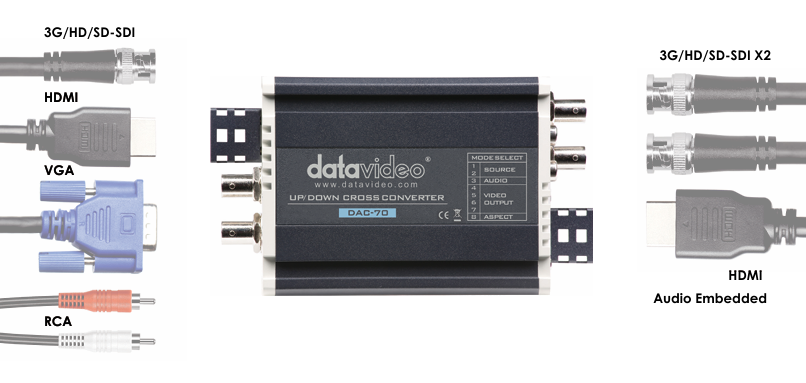
In the photo the Datavideo DAC-70
A very common application is the need to work with a 4K source and downscale it to Full HD for specific operations, or to reduce a UHD signal to HD to send it simultaneously to a 4K monitor and an HD switcher. Note that to reduce the resolution from 4K to HD while keeping the full frame, you use "scaling down" the signal, or downscaling, which is obviously different from "cropping", which instead means trimming the edges of the image.
In this field, Blackmagic Design is one of the most comprehensive brands in Audio Effetti's catalog: the range includes dozens of multi-format converters ideal not only for corporate, broadcast, museum, retail and hospitality environments, but also for live events, theaters, streaming productions, mobile control rooms, university campuses and permanent installations.
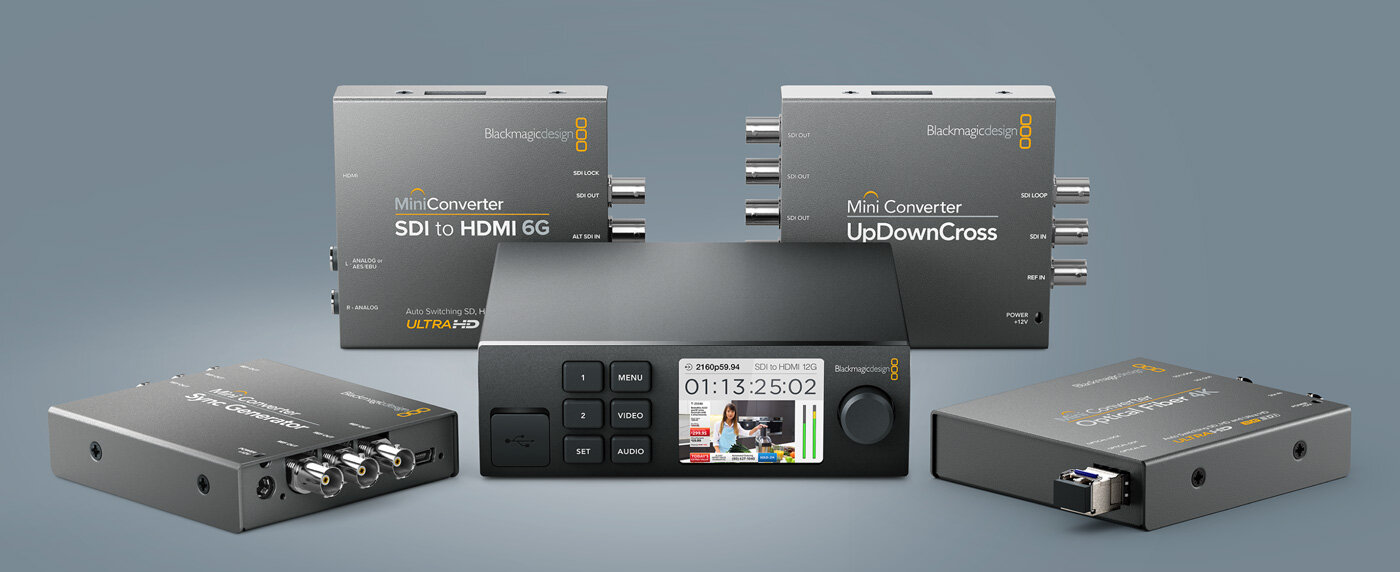
CYP also has specific devices in its catalog designed to perform this function, in particular the PRO-SDI2H. Choosing CYP means eliminating incompatibility problems in the field, thanks to reliable and tested hardware.
Encoders and decoders
Encoders and decoders represent the meeting point between traditional video sources and modern distribution infrastructures. If converters "translate" formats, encoders and decoders transport the signal, making it possible to encode, route, distribute and integrate it within complex systems, also - and above all - over IP networks. An encoder, therefore, takes a video signal, compresses it, turns it into an IP stream and sends it over the network, while the decoder performs the opposite function.
One of the most significant innovations is the arrival of Dante AV Ultra, which marks a decisive step in the evolution of video distribution over networks: it uses standard 1 Gbps infrastructures to carry signals up to 4K 60p in RGB 4:4:4 with lossless JPEG2000 compression and extremely low latency. Its strength is interoperability, thanks to unified audio and video management via Dante Controller, which simplifies configuration and routing.
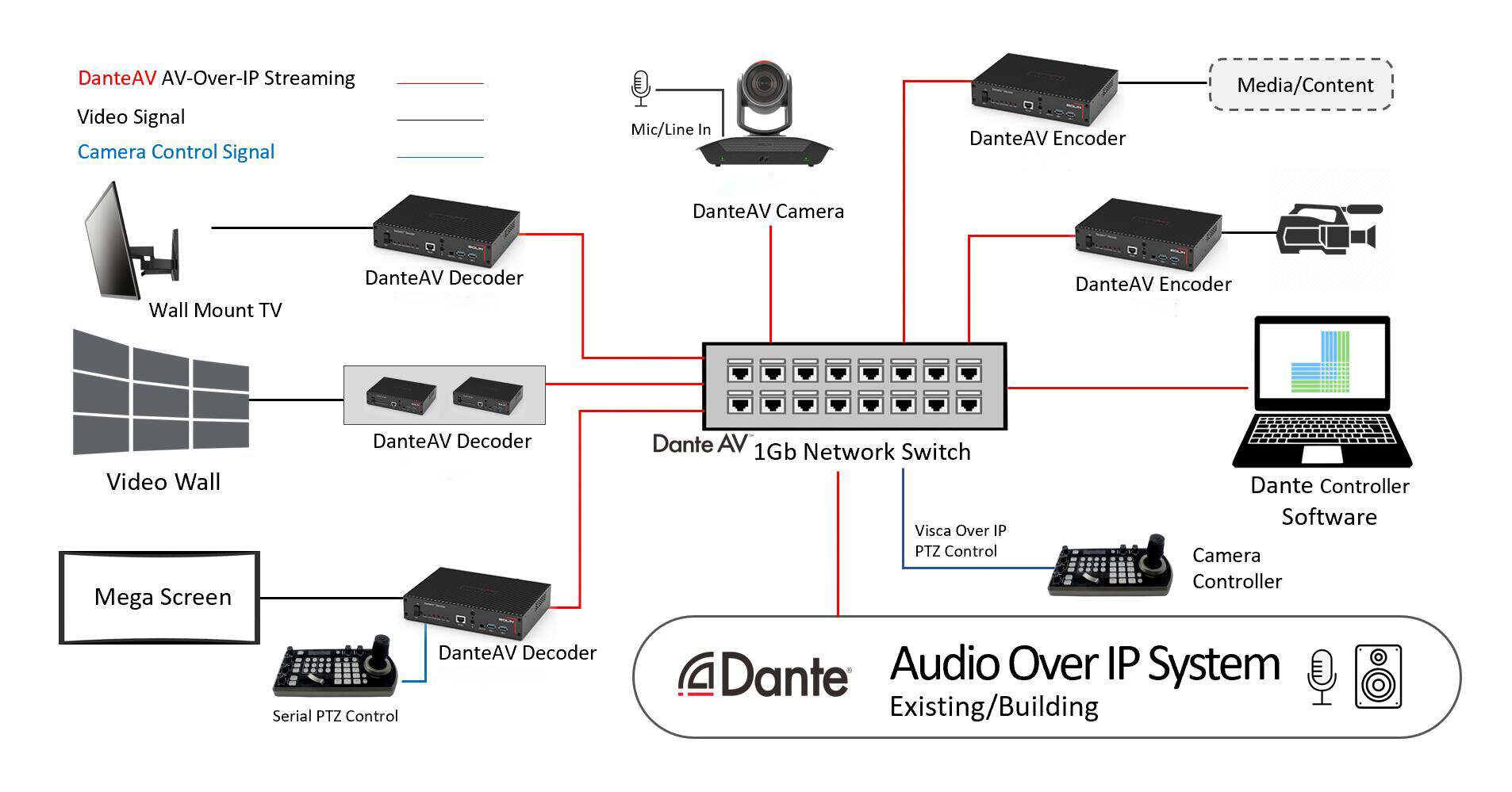
Encoders and decoders based on this technology integrate advanced functions such as audio embedding/de-embedding, PoE+, KVM control, VISCA, RS-422 and IR, creating a reliable bridge between HDMI/SDI video sources and modern IP networks. Dante AV Ultra is ideal for applications that require perfect synchronization and high quality - theaters, conference rooms, places of worship, concerts, sporting events, exhibitions, trade fairs, university classrooms, campuses, corporate environments and all situations where it is necessary to transmit audio/video content in real time with low latency and accurate synchronization - and allows complex content to be routed over the network while maintaining stability, scalability and minimum latency.
It is precisely in this context that the EGO Display line fits in, made up of three devices based on Dante AV Ultra and Dante AV-H technologies: the AVMaster-4KUltra-E encoder and the AVMaster-4KUltra-D and AVMaster-4KNDI-D decoders.
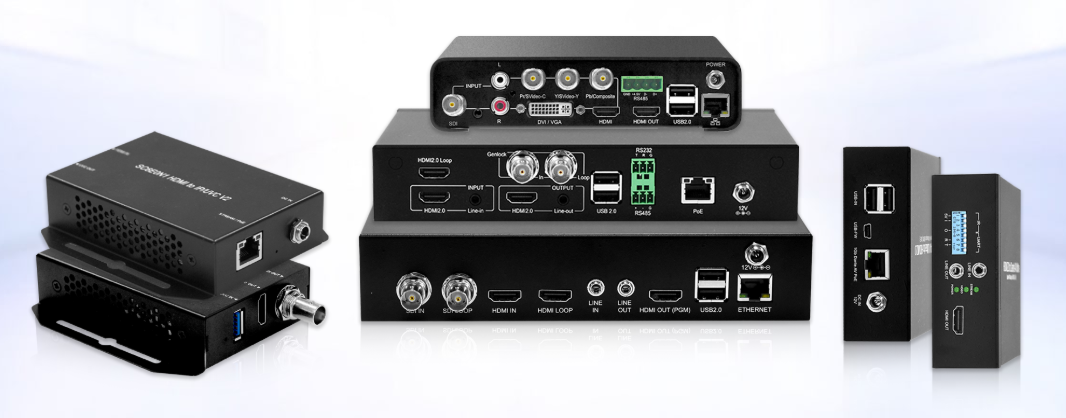
- AVMaster-4KUltra-E converts the HDMI 2.0 signal into a Dante AV Ultra stream, ideal for network distribution with extremely low latency and lossless quality
- AVMaster-4KUltra-D performs the reverse function, decoding the Dante AV Ultra stream and outputting it in HDMI 2.0 with total stability and audio/video synchronization
- AVMaster-4KNDI-D adds an additional level of flexibility, as it is able to decode both Dante AV-H streams and NDI 5 signals, converting them into HDMI 2.0 and 3G SDI, making it ideal for hybrid installations that combine different protocols.
These devices make it possible to create extremely versatile, scalable and easy-to-manage AV-over-network ecosystems, thanks to compatibility with Dante Controller and Dante Domain Manager, which enable centralized device management, the creation of separate domains for rooms or buildings and intuitive audio/video routing.
Thanks to their flexibility, EGO Display encoder/decoder units integrate perfectly with PTZ cameras, control systems, professional monitors, video walls, digital signage, control rooms and lightweight broadcast solutions. The main reason to choose these devices is their ability to adapt to any scenario, creating an integrated system that communicates perfectly with Agora products, PTZOptics and the future solutions distributed by Audio Effetti.
Extenders, to overcome HDMI limitations
Traditional HDMI cannot cover long distances, and this represents one of the most evident limitations in modern installations. Extenders solve this problem by using technologies designed to carry the video signal much farther than a simple HDMI cable, while maintaining all its quality, stability and compatibility characteristics.
HDBaseT technology is today one of the most widespread solutions: it makes it possible to transmit 4K signals over CAT cable up to 100 meters, often including audio, control and power as well (via the PoH - Power over HDBaseT standard). When distances become even greater, fiber optics guarantee stable transmission and immunity to electromagnetic interference, making them ideal for campuses, theaters, conference centers and museum installations. Cat.6/Cat.7 infrastructures are also widely used for their flexibility and ease of integration into existing systems.
In some cases, the signal can also be transported over an IP network, not as a full AV-over-IP solution (a topic already covered previously), but as a simple means of signal extension. This can happen in two ways:
- Point-to-Point connection (One-to-One): this is the simplest configuration. A single transmitter sends the signal to a single receiver via a dedicated network cable (or through a switch). It is the ideal solution when you simply need to bring video from a source (e.g. a PC in the control room) to a distant display (e.g. a monitor on stage)
- Point-to-Multipoint connection (One-to-Many): here we exploit the true power of the network. A single transmitter sends the signal to an IP network switch, which duplicates it and distributes it to multiple receivers simultaneously. It is perfect for applications such as Digital Signage in shops or museums, where the same video content must be shown identically on ten or twenty monitors spread throughout the facility, without having to purchase expensive dedicated signal distributors.
In all these scenarios, modern extenders ensure lossless 4K/8K transmission, minimum latency, full compatibility, PoE power and simpler, more reliable cabling.
In this package, where does CYP fit in?
CYP is one of the most comprehensive brands in the video signal management sector and is a fundamental pillar of Audio Effetti's catalog. Its offer includes, among others, many entry-level, mid-range and high-end HDBaseT Extenders . CYP products are perfect for guaranteeing system integrators maximum interoperability, eliminating HDMI handshake problems in the field.
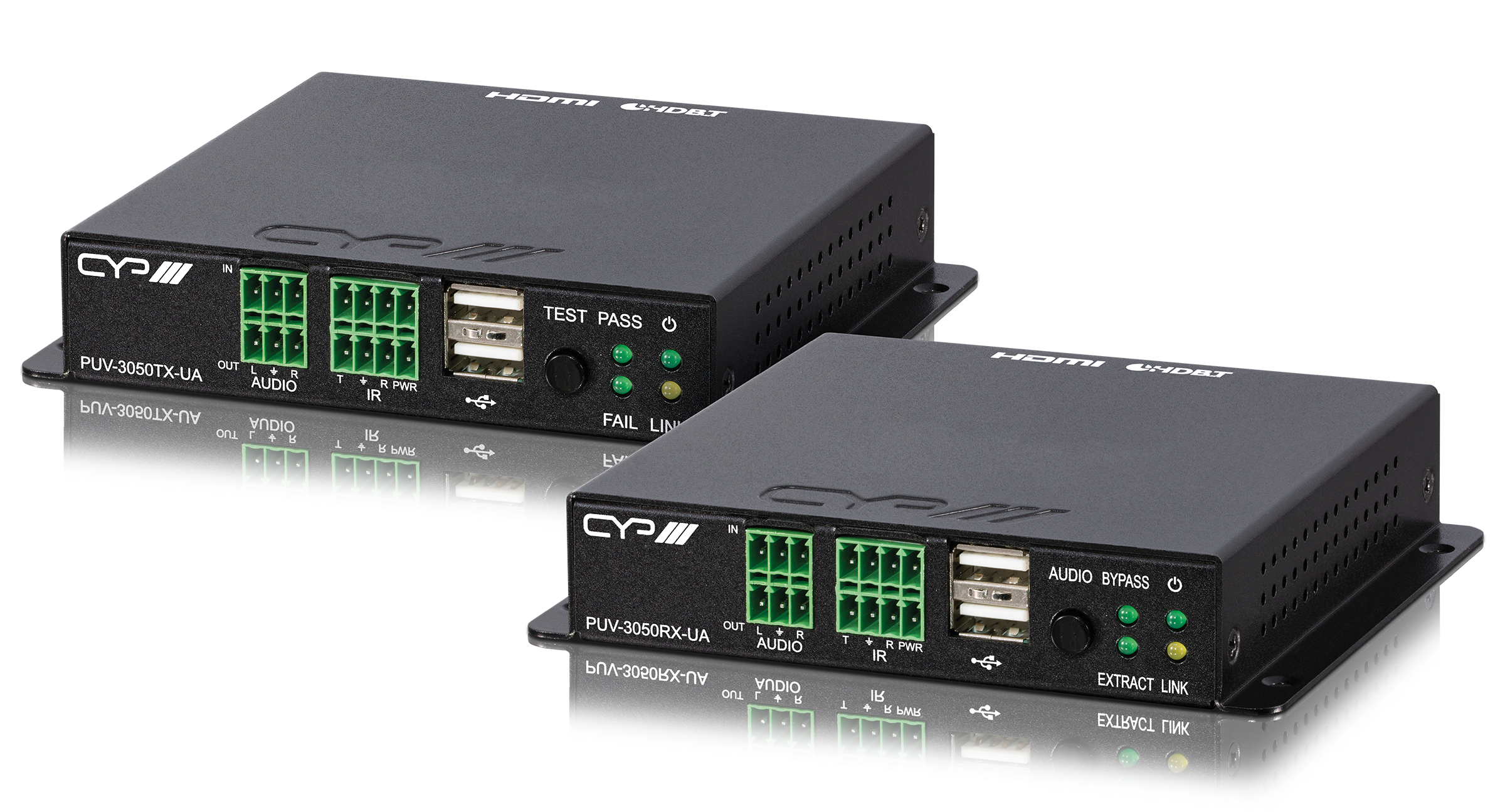
In the photo, an example of a high-end extender kit CYP based on HDBaseT 3.0 technology. It is capable of transmitting uncompressed HDMI 2.0 signals up to 4K @ 60 Hz (4:4:4, 8-bit or 4K HDR), HD audio and control signals via a single Cat.6a/7 cable, up to a distance of 40 m
Among the wide range of products of this type, it is still possible to choose extenders based on transmission over fiber optic. Examples include products from Pixelhue, Beetek and CYP themselves CYP.
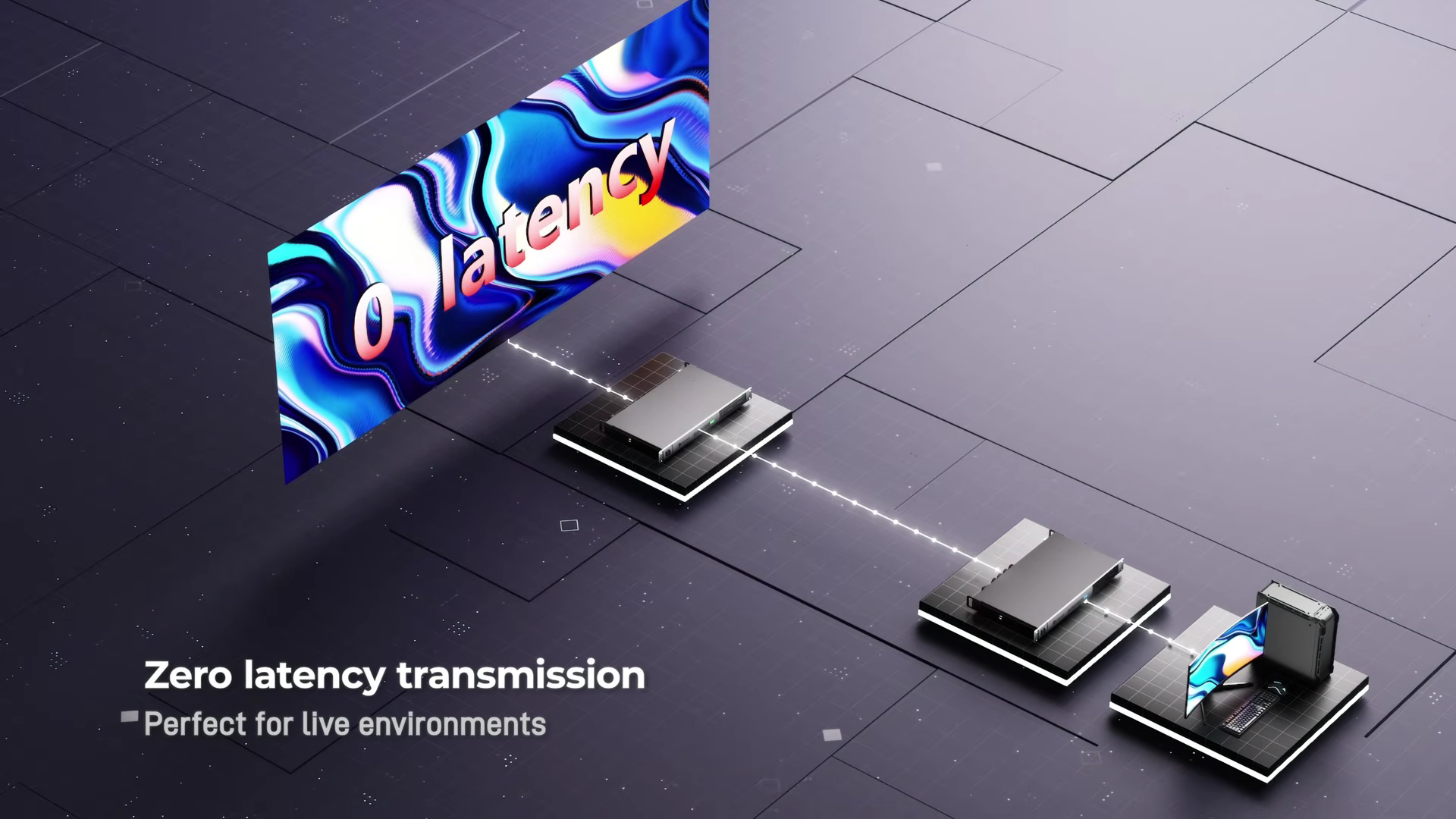
Pixelhue EP4 Pro R/T Fiber Extender
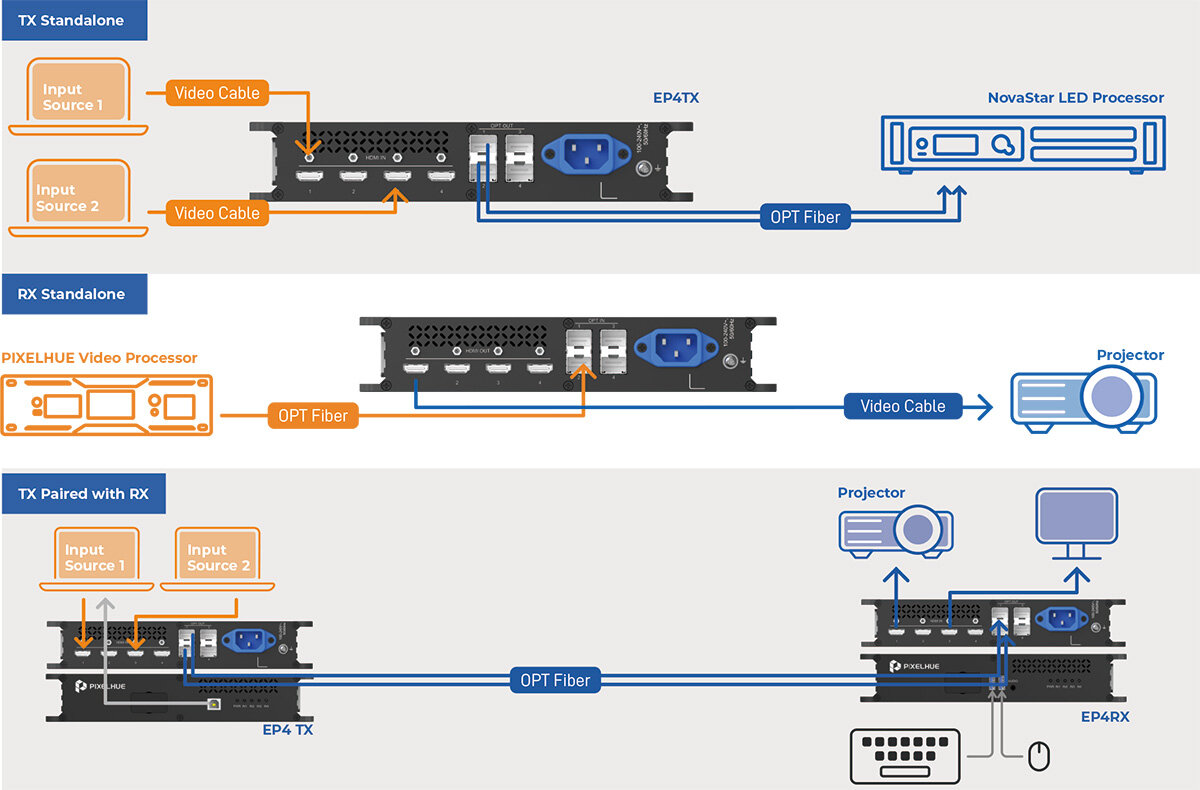
Pixelhue Fiber Optic Extender
The arrival of 4K/8K and the need for ever more high-performance devices
The increase in resolutions has made signal management even more complex. 4K and 8K require much higher bandwidth (up to 48 Gbps for HDMI 2.1), HDR support, refresh rates up to 120 Hz, management of HDCP 2.2/2.3 protection keys and precise synchronization between source and display.
Modern devices, such as those offered by the manufacturers featured in Audio Effetti's catalog, are designed to ensure that all this works without interruption, guaranteeing compatibility and stability even in the most complex installations.
Conclusion
Converters, encoder/decoder units and extenders are the fundamental elements that ensure the correct operation of modern video installations: without them nothing would work as it should. They are the invisible foundation that allows sources, displays and control systems to communicate in a stable, reliable and professional way, especially in the 4K and 8K era.
Want to know more?
For more information contact your local agent or send an email to info@audioeffetti.it


