
 English
  French

As broadcast and live productions become increasingly complex, Fairlight Live stands out as Blackmagic Design’s new mixing system, featuring extremely advanced capabilities and bringing the power, flexibility and heritage of one of the most prestigious names in professional audio into the live production environment. A fully software-based, scalable and redundant mixer, Fairlight Live is capable of handling hundreds or even thousands of channels, depending on the processing power of the connected computer. It has been designed for professionals who work every day where audio and video converge.
In our previous article dedicated to PA and installation mixers, we highlighted how analogue models still play an important role in specific areas of the professional audio industry: they are straightforward, robust, intuitive, cost-effective and well suited to many traditional live applications. However, as operational requirements become more demanding, the limitations of analogue technology inevitably begin to emerge.
Multi-camera video podcasts, hybrid events, sports broadcasts and IP-based workflows requiring automation, redundancy and remote management are all scenarios in which an analogue mixer is no longer sufficient. Digital technology offers significant advantages, including:
- Flexible and dynamic routing
- Advanced signal processing
- Integration with audio and video networks
- Snapshots, automation and instant recall of configurations and scenes
- Redundancy for maximum operational reliability
- Virtually unlimited scalability
Digital mixers are certainly not new. They have been around for decades, having first appeared between the mid-1980s and the early 1990s, fundamentally changing the way professionals work in recording studios, post-production facilities, film production and broadcasting. Today, however, we are witnessing a generational leap within the category itself. Modern production environments require tools that are not only digital, but also deeply integrated with video systems, IP protocols and hybrid workflows. This is precisely where Fairlight Live comes into play. Before taking a closer look at this remarkable solution, let us step back for a moment and briefly retrace the history of Fairlight.
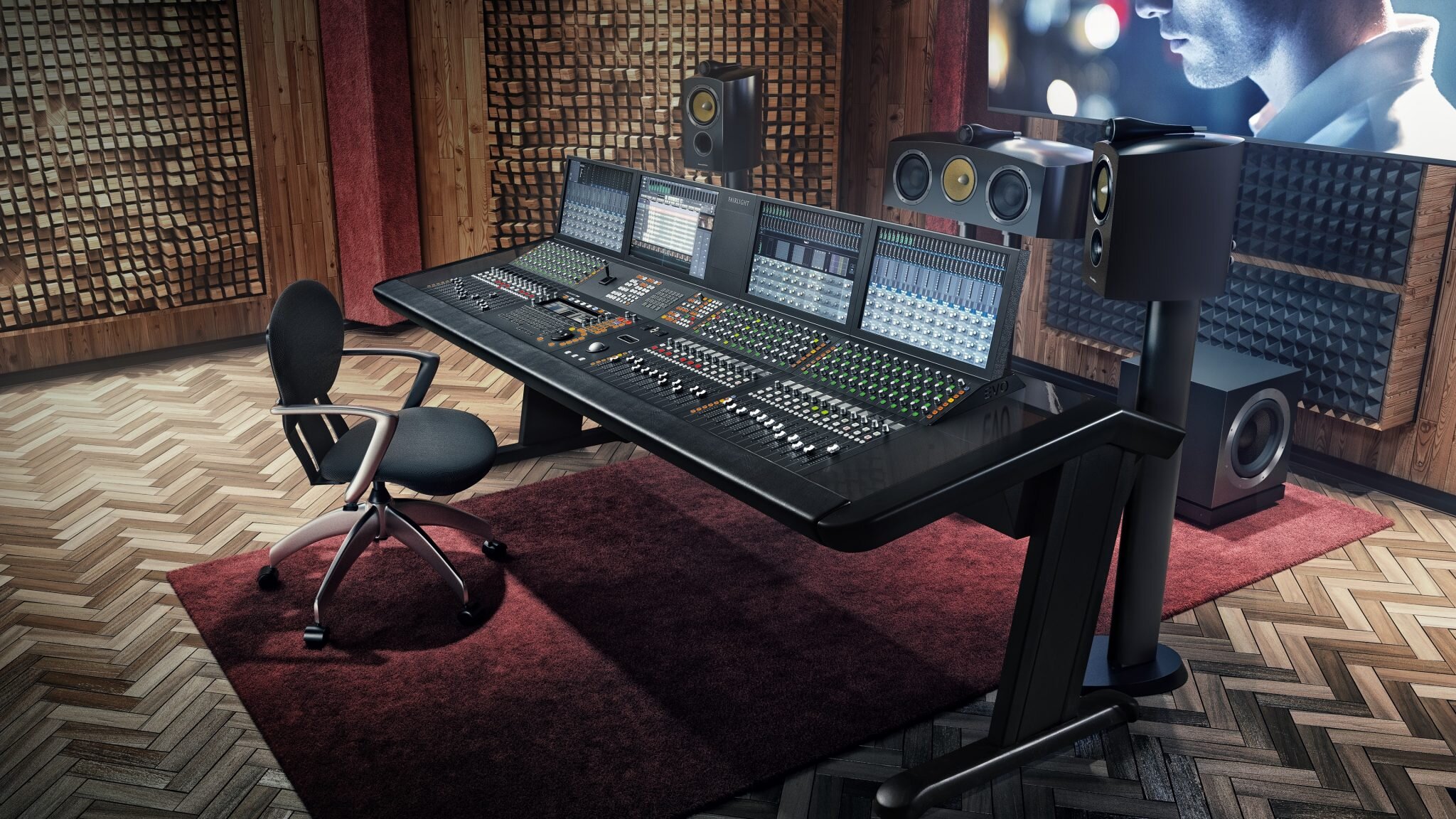
A brand that shaped the history of professional audio
To fully appreciate the significance of Fairlight Live, it is important to understand what the Fairlight name represents in the world of professional audio.
Founded in Australia during the 1970s, Fairlight became renowned for the CMI (Computer Musical Instrument), one of the first digital samplers in history, used by artists such as Peter Gabriel, Kate Bush and Herbie Hancock. In the years that followed, the company specialised in audio post-production systems, developing digital workstations, mixers and professional control surfaces, non-linear editing systems, as well as proprietary technologies for sound design and automation.
For decades, the Fairlight name has been synonymous with groundbreaking technological innovation, advanced workflows, uncompromising quality and outstanding reliability. In Italy, too, the brand has always enjoyed a special reputation. It was never a mass-market product, but rather a benchmark for audio engineers and broadcast professionals. Throughout the 1980s and 1990s, Fairlight systems could be found in major broadcasting facilities, dubbing and post-production studios, and film production environments. These were sophisticated, high-value tools designed for intensive professional use, chosen by engineers seeking precision, reliability and, above all, advanced workflows at a time when digital technology was still in its infancy and only a handful of DAWs existed.
Many Italian professionals still remember the Fairlight workstations and non-linear editing systems that defined an era, becoming industry standards for audio post-production and helping to establish a true “Fairlight culture”: a way of working built around rigorous standards, uncompromising quality and maximum operational efficiency.
Ten years ago, Blackmagic Design chose to acquire Fairlight because of its legacy of technical excellence and its expertise in designing integrated audio systems for the most demanding production environments. At the time, the Australian company’s products were renowned for the speed, flexibility and audio quality of their processing engines, capable of handling up to 1,000 tracks while offering advanced features such as time compression and expansion for audio-video synchronisation, as well as immersive workstations compatible with formats such as Dolby Atmos, to name just one example.
Blackmagic stated that the goal of the acquisition was to integrate this high-end technology into its video product range, creating a complete and professional audio-video ecosystem capable of meeting the demands of modern broadcasting and increasingly complex live productions.
For this reason, the acquisition of the Fairlight brand by Blackmagic Design was welcomed in Italy as a significant return. Not only did it preserve an important technological heritage, but it also made it more modern, accessible and tightly integrated with video workflows, greatly expanding its potential user base. With Fairlight Live, this legacy once again takes centre stage in the live production and multi-camera broadcast sectors, areas in which Italy has always been particularly active and where Fairlight’s quality and reliability have long been recognised and appreciated.
Today, Fairlight can be considered a true Blackmagic Design sub-brand dedicated to professional audio. Everything related to audio within the Blackmagic ecosystem carries the Fairlight name, from the audio page within DaVinci Resolve to the integrated audio engines found in ATEM switchers. With Fairlight Live, this technology has been taken beyond the post-production environment and transformed into a standalone application capable of managing audio in real time by harnessing the processing power of modern CPUs.
Fairlight Live: the digital mixer reinvented
Blackmagic Design describes Fairlight Live as “the world’s most powerful live audio mixer”. This is not a marketing claim; it is simply an accurate technical description.
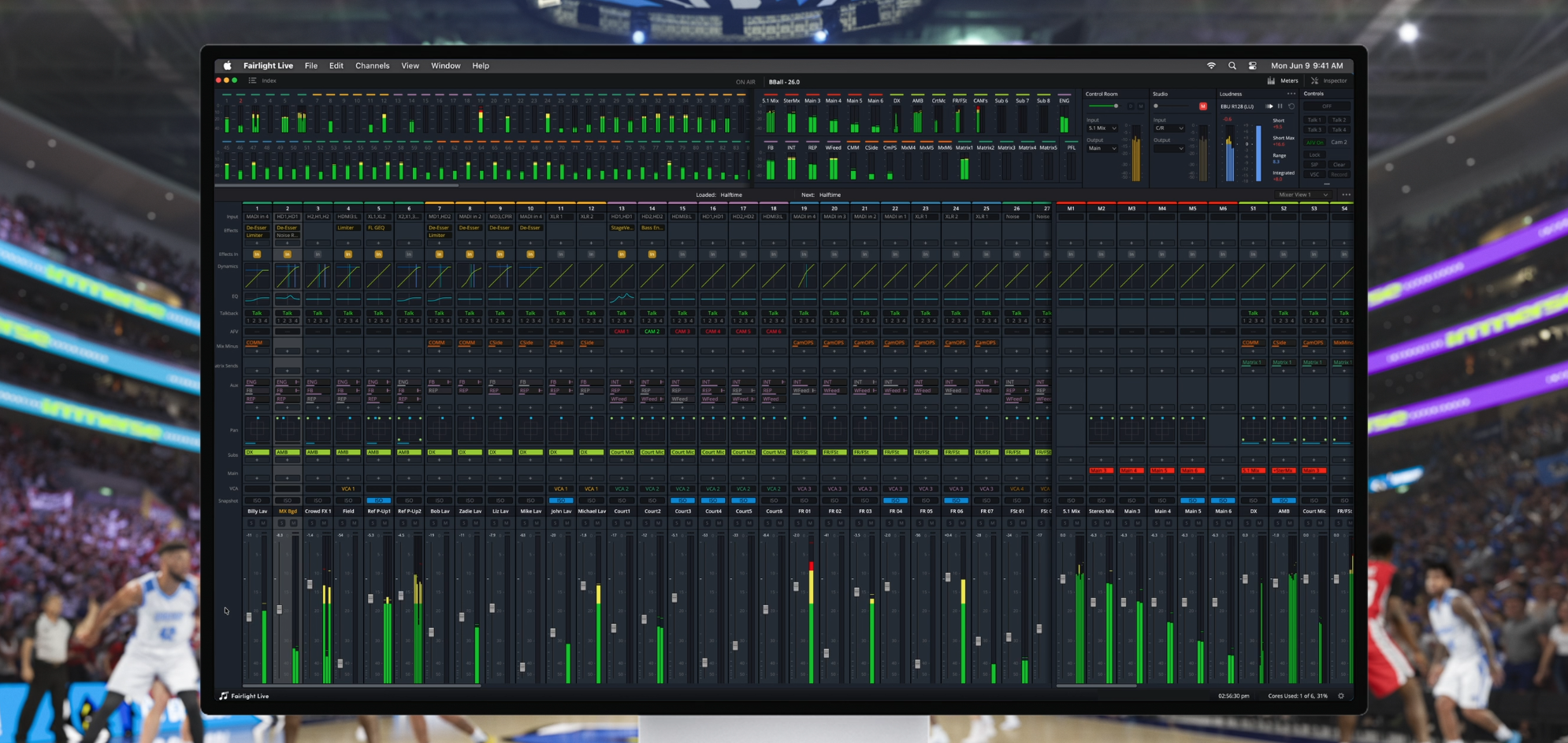
Unlike traditional hardware mixers, Fairlight Live is a powerful live audio mixing system built entirely on software. Fully customisable by design, it delivers a level of processing power that very few dedicated hardware consoles can match.
Fairlight Live offers:
- Spatial audio mixing
- SMPTE ST 2110 broadcast workflows
- Full redundancy (Primary, Failsafe, Prep, Remote and On-Air systems)
- The ability to manage hundreds or even thousands of audio channels, depending on the computer used. Even an entry-level system such as a Mac mini can handle around 200 live channels, while a Mac Studio is the ideal choice for more demanding productions. Layouts and routing can be configured entirely according to operational requirements.
- Operation using either the computer’s audio engine or the USB audio interface of ATEM switchers
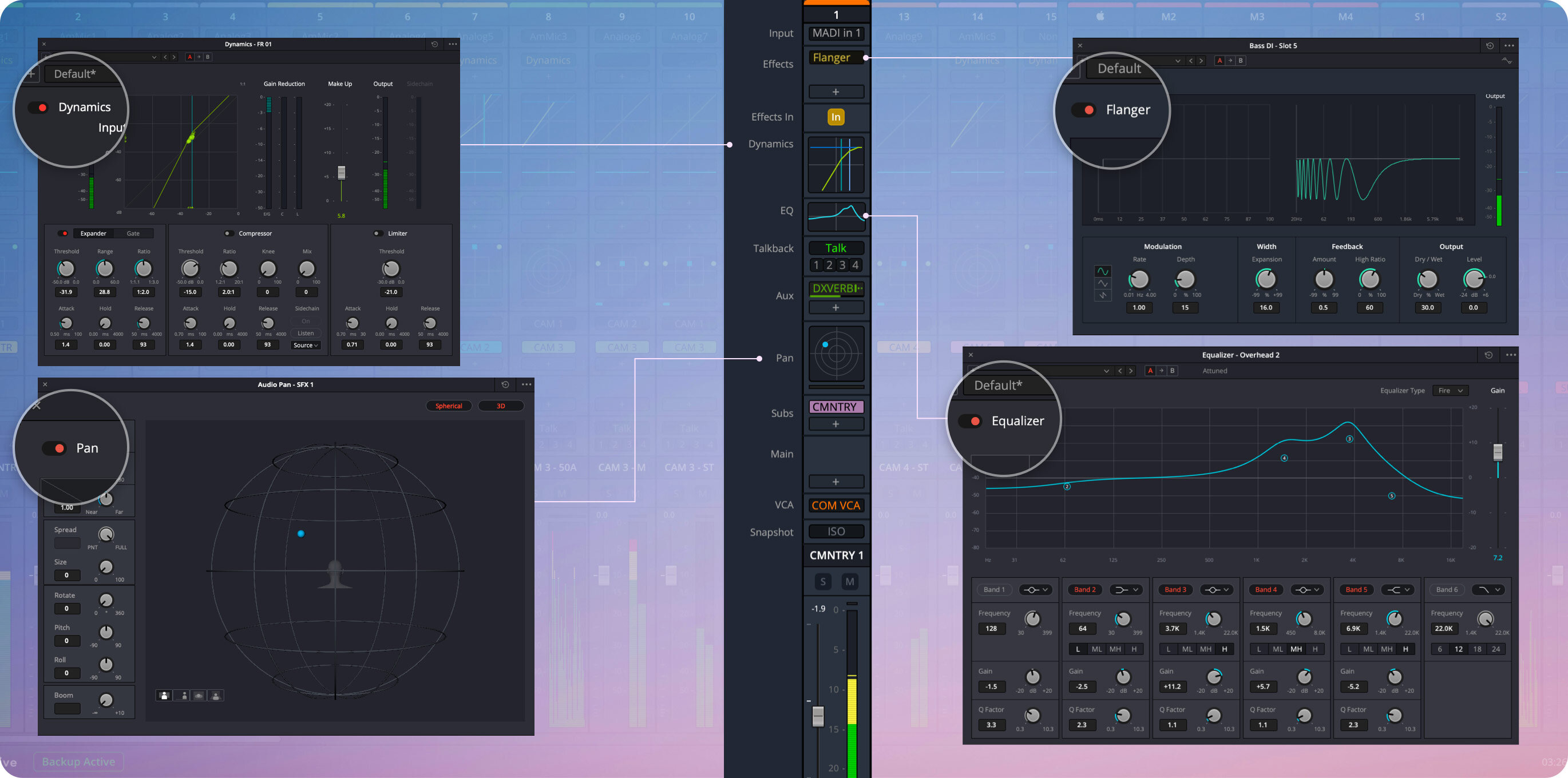
- Integrated effects, third-party plug-ins, snapshots and cue player functionality
- Fully customisable talkback buses, monitoring and routing
- Advanced automation tools
- Immersive audio and 3D panning
- Remote control via iPad, or local operation using a keyboard and mouse
It is a system that grows alongside production requirements: it can run on a laptop for a podcast or on a high-performance workstation for an international sports event.
The real breakthrough lies in its ability to handle workflows that previously required dedicated hardware, particularly those based on SMPTE ST 2110. Fairlight Live is ready for modern IP-based production environments, from straightforward live streaming applications to large-scale broadcast productions, offering a level of flexibility and scalability that hardware mixers simply cannot match. This clearly positions Fairlight Live within the broadcast market, especially considering that Dante is not natively supported.
However, since the system currently runs on Mac computers as its host platform—although Windows and Linux compatibility is already planned—users equipped with a Dante Virtual Soundcard can still integrate Fairlight Live into an existing AV infrastructure, such as a house of worship or event venue, without adding new cabling or reconfiguring the existing network architecture.
Fairlight Live represents a completely new approach to live production workflows. First of all, there are no audio I/O interfaces built into the core system. The Audio Panels, which we will discuss shortly, are control surfaces equipped with only minimal audio hardware, such as talkback microphone inputs and XLR monitor outputs. More importantly, Fairlight Live allows users to work directly with the I/O architecture already present within their existing infrastructure. Since it does not include integrated I/O cards, external audio interfaces connected via USB, Thunderbolt or network protocols are required to capture microphones and instruments.
While it can certainly be used for live music productions, Fairlight Live truly excels in environments where audio and video coexist. Thanks to its software-based architecture and advanced feature set, it can operate as an audio mixer fully synchronised with video across a wide range of applications, including:
- Audio and video podcasts
- Multi-camera productions
- Sports events
- IP broadcasting
- Television control rooms
- Hybrid corporate events
- Live streaming
- Multimedia production
In these environments, Fairlight Live delivers capabilities that traditional live mixers struggle to provide. Put simply, it is a mixer designed for the professionals working behind the scenes rather than on the stage.
Physical control and the differences between the three models
For live production professionals, physical control remains essential. No one would consider using a conventional audio workstation for live mixing, for reasons that industry professionals know all too well. Above all, nothing can replace the immediacy of hands-on operation and instant tactile feedback that only a dedicated control surface can provide.
For this reason, Blackmagic Design offers three different control surfaces, all fully integrated with Fairlight Live:
All Audio Panels feature motorised faders, touchscreens, and dedicated controls for buses, aux sends, VCAs, matrices and talkback functions. They are designed to provide fast operation, precise control and immediate access to the mixer’s critical functions, even in the most demanding production environments.
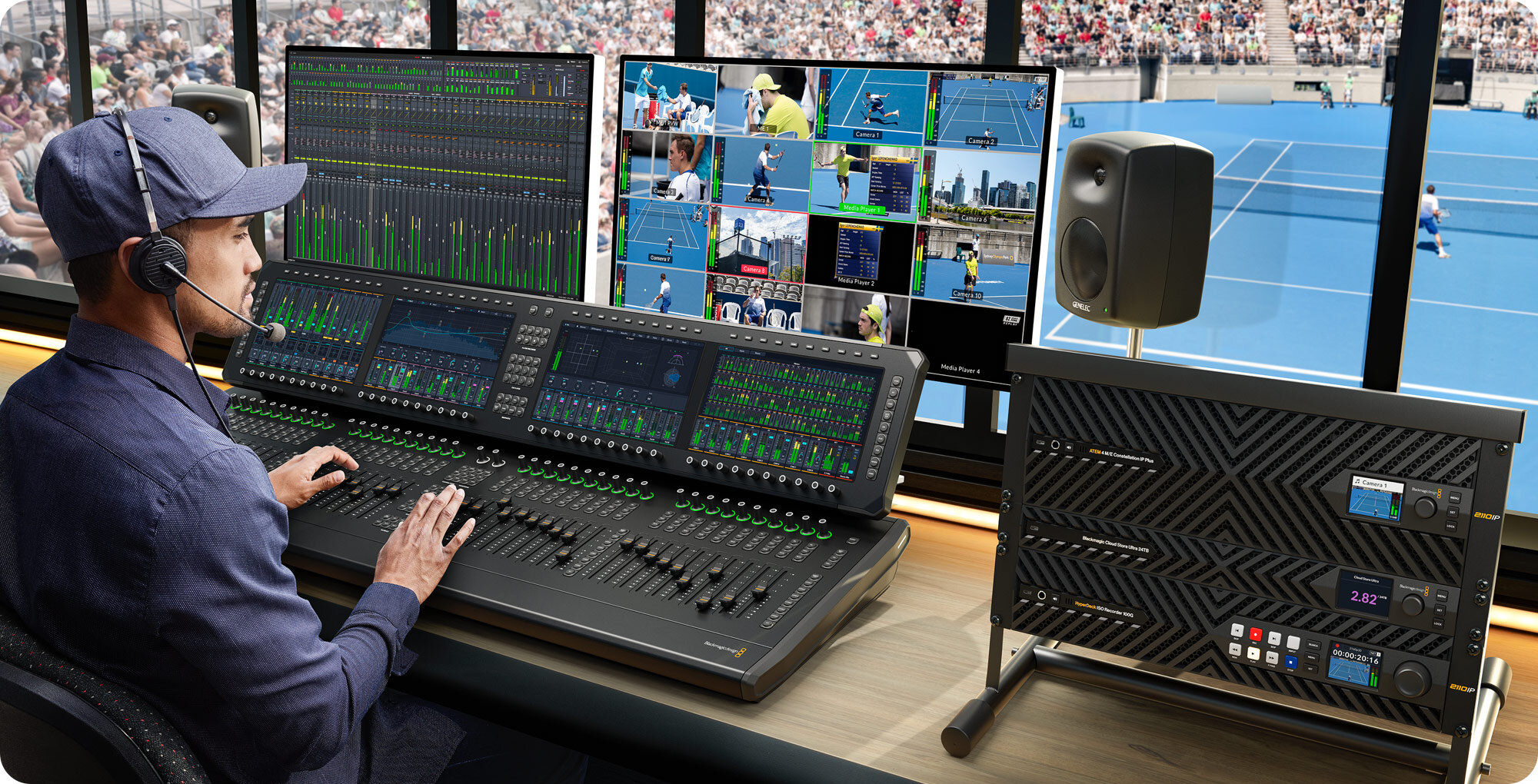
The panels are suitable for studios, OB vans, theatres, broadcast control rooms and live productions of any scale. When paired with a Blackmagic Design ATEM switcher, an Audio Panel can receive MADI audio signals from the console and control the entire mix directly from the Fairlight surface. This allows television productions to be managed without sharing the control surface with the audio engineer, keeping audio and production workflows separate while maintaining perfect synchronisation between them.
Fairlight Live Audio Panel 10
The most compact model in the range, the Fairlight Live Audio Panel 10 is designed for production studios, podcasts, mobile control rooms and installations where space is at a premium. It features 10 motorised faders, an 11.6-inch touchscreen and dedicated controls for channels, buses and the mixer’s core functions. It is ideally suited to streamlined productions that require fast operation and immediate hands-on control without the complexity of a larger control surface.

Fairlight Live Audio Panel 10 - Compact desktop control surface, 10 motorized faders, 11.6" touchscreen for real‑time control of channel processing, EQ, dynamics and Plug‑ins, direct access to layers, buses, matrix, aux, VCA, sub‑masters and talkback
kr 14.590,30
Fairlight Live Audio Panel 20
The mid-range solution in the series, designed for multi-camera productions, corporate events, streaming applications and medium-sized control rooms. It features 20 motorised faders and two 11.6-inch touchscreens, providing an excellent balance of control surface space, ergonomics and operational capability. The Panel 20 allows operators to manage a greater number of channels and layers simultaneously while maintaining a smooth, efficient and highly productive workflow.

Fairlight Live Audio Panel 20 - Desktop control surface, 20 motorized faders, 2 × 11.6" touchscreen for real‑time control of channel processing, EQ, dynamics and Plug‑ins, direct access to layers, buses, matrix, aux, VCA, sub‑masters and talkback
kr 23.290,58
Fairlight Live Audio Panel 40
The flagship control surface in the range, designed for broadcast environments, sports productions, large-scale live events and SMPTE ST 2110 workflows. Featuring 40 motorised faders and four 11.6-inch touchscreens, it provides maximum visibility and comprehensive control over channels, buses, VCAs, matrices and advanced mixer functions.
The first touchscreen is dedicated to signal processing tasks and serves as the primary processing screen, while the last functions as the master screen, providing an overall view and supervision of the entire mix. The Panel 40 is engineered for complex production environments where speed, redundancy and the simultaneous management of a large number of audio sources are essential.

Fairlight Live Audio Panel 40 - Desktop control surface, 40 motorized faders, 4 × 11.6" touchscreen for real‑time control of channel processing, EQ, dynamics and Plug‑ins, direct access to layers, buses, matrix, aux, VCA, sub‑masters and talkback
kr 49.699,41
Conclusions
The introduction of Fairlight Live marks a turning point in the world of audio production. For years, we have witnessed the steady evolution of digital mixers: more channels, more DSP power and more features. What Blackmagic Design is introducing with Fairlight technology, however, is something fundamentally different—a true paradigm shift. Rather than adding more power to a hardware mixer, Fairlight Live removes the physical limitations of the mixer itself, transforming it into a scalable, software-based system with built-in redundancy and native video integration.
In an industry where productions are becoming increasingly complex, solutions such as Fairlight Live represent a significant step forward. They combine everything that made the Fairlight name famous with the flexibility and processing power available today. This approach makes it possible to manage hundreds or even thousands of channels, work with immersive audio, integrate directly with ATEM switchers and operate with a level of redundancy that, until only a few years ago, was reserved exclusively for major broadcast facilities.
The difference compared to traditional solutions is not merely technical; it is also cultural. Fairlight Live brings to live production the same philosophy that made Fairlight an icon of the post-production industry. A philosophy built on uncompromising quality, operational efficiency and the ability to handle complex productions without compromise. Today, that legacy is being renewed in a form that is more accessible, more powerful and perfectly aligned with the demands of modern production environments.
For professionals working where audio and video converge, for those managing dynamic productions and for anyone requiring complete operational control, Fairlight Live represents a new way of thinking about audio production: a system that looks ahead and, in many respects, anticipates the future of the industry.
Want to learn more?
Email us at international@audioeffetti.com


